


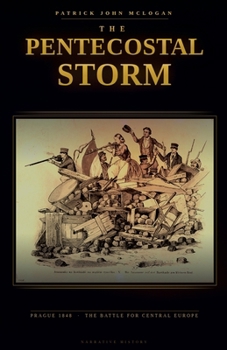
The Pentecostal Storm: Prague 1848 and the Battle for Central Europe

On the morning of 12 June 1848, thousands of Prague citizens gathered in the city's great square for a religious festival - and walked into a revolution. Within hours, hundreds of barricades had risen from the cobblestones of the medieval Old Town. Within six days, artillery from the heights above the Vltava had broken them. The Pentecostal Storm, as Czechs came to call it, was one of the most consequential and least-known episodes of the revolutionary year that convulsed Europe from Paris to Budapest.
Patrick John McLogan's narrative history reconstructs the Prague Uprising of 1848 in full human and political detail: the aging historian Frantisek Palack who invented the Czech national identity; the twenty-one-year-old law student Josef V clav Frič who took it to the barricades; the Russian anarchist Mikhail Bakunin who arrived preaching total destruction; and the Field Marshal whose artillery silenced them all. It is a story of competing visions for how a small nation might survive between great empires - a question that Palack answered in a single letter to the Frankfurt Parliament with an intellectual force that still resonates today.
Brilliantly researched and compellingly told, The Pentecostal Storm reveals how a week of street fighting in a Bohemian city shaped the political fate of Central Europe for the next seventy years.
Customer Reviews
ThriftBooks ® and the ThriftBooks ® logo are registered trademarks of Thrift Books Global, LLC
