


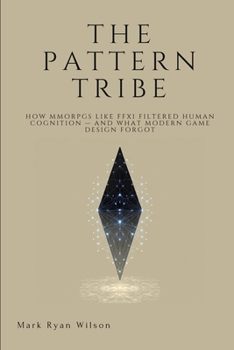
The Pattern Tribe: How MMORPGs Like FFXI Filtered Human Cognition - And What Modern Game Design Forgot

In the early days of online gaming, something profound unfolded beneath the surface. Games like Final Fantasy XI didn't just entertain millions-they unknowingly created digital ecosystems that sorted people by how their brains processed rhythm, cooperation, and cognitive synchronization.
The Pattern Tribe explores how early MMORPGs functioned as unintentional cognitive laboratories, filtering players not by reflexes, but by their ability to perceive patterns, synchronize with others, and adapt to external rhythms. Long before today's matchmaking algorithms, these worlds fostered rare communities built on cognitive compatibility-what author Mark Ryan Wilson calls cognitive compatibility clusters.
As modern game design increasingly strips away friction, synchronization, and true interdependence, we lose more than challenge-we lose the environments that naturally cultivate adaptive intelligence, rhythmic problem-solving, and long-term social trust.
Blending cognitive science, behavioral research, game design theory, and decades of MMO history, Sigma Xi member Mark Ryan Wilson presents a new framework for understanding how digital ecosystems shape not only our playstyles-but our brains.
Inside this book you'll discover:
Why rhythmic pattern recognition was key to early MMO success
How friction and real-time cooperation forged lifelong bonds
The hidden cost of design trends that flatten cognitive diversity
How future digital platforms could rebuild these lost ecosystems
What this means for games, research, and the evolution of digital communities
For gamers, game designers, researchers, and anyone who wonders why online worlds used to feel different - The Pattern Tribe offers an entirely new perspective on the hidden cognitive architecture behind our most formative digital experiences.
Customer Reviews
ThriftBooks ® and the ThriftBooks ® logo are registered trademarks of Thrift Books Global, LLC
