


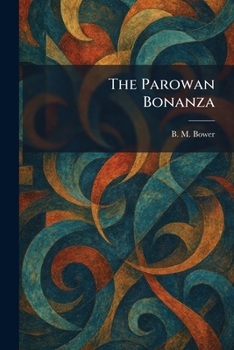
The Parowan Bonanza

Select Format
Select Condition 
Book Overview
"The Parowan Bonanza" is a classic Western adventure penned by B. M. Bower, one of the most prolific and popular voices in early twentieth-century genre fiction. The narrative follows the fortunes of Bill Brown, a desert prospector whose discovery of a rich gold vein-the titular bonanza-sets off a chain of events that transforms a quiet landscape into a site of frantic ambition. As word of the strike spreads, Brown must navigate the influx of fortune hunters, swindlers, and laborers who descend upon the claim.
Bower's storytelling excels in its depiction of the rugged American West, blending a fast-paced plot with the authentic details of mining life and frontier dynamics. The work explores the psychological and social impacts of sudden wealth, balancing action with a keen observation of character. With its mix of humor, suspense, and frontier morality, "The Parowan Bonanza" stands as a significant contribution to the Western canon, capturing the spirit of an era defined by the search for prosperity and the challenges of the untamed wilderness.
This work has been selected by scholars as being culturally important, and is part of the knowledge base of civilization as we know it. This work was reproduced from the original artifact, and remains as true to the original work as possible. Therefore, you may see the original copyright references, library stamps (as most of these works have been housed in our most important libraries around the world), and other notations in the work.
This work is in the public domain in the United States of America, and possibly other nations. Within the United States, you may freely copy and distribute this work, as no entity (individual or corporate) has a copyright on the body of the work.
As a reproduction of a historical artifact, this work may contain missing or blurred pages, poor pictures, errant marks, etc. Scholars believe, and we concur, that this work is important enough to be preserved, reproduced, and made generally available to the public. We appreciate your support of the preservation process, and thank you for being an important part of keeping this knowledge alive and relevant.
Customer Reviews
ThriftBooks® and the ThriftBooks® logo are registered trademarks of Thrift Books Global, LLC
