


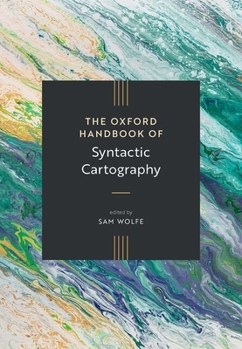
The Oxford Handbook of Syntactic Cartography
No Customer Reviews

The Cartographic Program, which seeks to draw highly detailed maps of syntactic structure, has been both influential and controversial in syntactic theory since the 1990s. This handbook provides a detailed showcase of cartographic theorizing, and shows the diversity of scholars' perspectives in light of the status of cartography as a research programme. The volume begins with an introductory chapter that sets the scene for the volume by outlining core tenets of cartographic theorizing, the impact that cartographic research has had on the understanding of different portions of linguistic structure, and the potential tensions between the Cartographic Program and Minimalism. Part I then presents the latest research on the extended structure of the verbal and inflectional domain, before Part II revisits the question of the articulated structure of the upper portion of the clause, namely the left periphery, which has had a central role in cartographic studies since the 1990s. Beyond the clause, the chapters in Part III focus on the articulated structure of nominal expressions and prepositional phrases. Finally, the contributions in Part IV demonstrate the value of cartographic work in the domain of first- and second-language acquisition research and in historical linguistics. The empirical reach of the volume is exceptionally broad, with data drawn from several dozen languages, many of which are understudied.
Format:Hardcover
Language:English
ISBN:0198921047
ISBN13:9780198921042
Release Date:April 2027
Publisher:Oxford University Press
Length:576 Pages
Related Subjects
Language ArtsCustomer Reviews
0 rating
Copyright © 2026 Thriftbooks.com
Terms of Use | Privacy Policy | Do Not Sell/Share My Personal Information | Cookie Notice | Cookie Preferences | Accessibility Statement
ThriftBooks ® and the ThriftBooks ® logo are registered trademarks of Thrift Books Global, LLC
ThriftBooks ® and the ThriftBooks ® logo are registered trademarks of Thrift Books Global, LLC
