


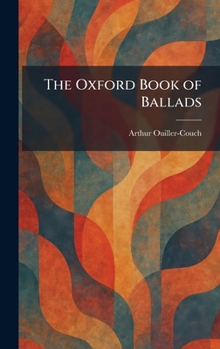
The Oxford Book of Ballads

"The Oxford Book of Ballads" is a definitive anthology of traditional British poetry, curated to showcase the rich heritage of oral storytelling and communal song. This collection brings together the finest examples of English and Scottish ballads, spanning centuries of cultural history and preserving the authentic voices of the folk tradition. The volume is organized into thematic sections, covering a vast range of human experience-from tragic tales of betrayal and heroic deeds to romantic legends and supernatural encounters.
The work emphasizes the rhythmic power and lyrical simplicity of the ballad form. Readers will encounter classic narratives such as "Sir Patrick Spens," "The Twa Corbies," and the legendary cycles of Robin Hood, alongside numerous regional songs that highlight the diversity of the British Isles. Each selection reflects the raw emotional intensity and narrative clarity that define the genre. As a vital contribution to the study of English literature, "The Oxford Book of Ballads" serves as an essential resource for those interested in folklore, history, and the evolution of poetic expression. It stands as a testament to the enduring legacy of the oral tradition and its profound influence on the literary canon, offering a timeless exploration of the myths and realities that shaped a nation's identity.
This work has been selected by scholars as being culturally important, and is part of the knowledge base of civilization as we know it. This work was reproduced from the original artifact, and remains as true to the original work as possible. Therefore, you may see the original copyright references, library stamps (as most of these works have been housed in our most important libraries around the world), and other notations in the work.
This work is in the public domain in the United States of America, and possibly other nations. Within the United States, you may freely copy and distribute this work, as no entity (individual or corporate) has a copyright on the body of the work.
As a reproduction of a historical artifact, this work may contain missing or blurred pages, poor pictures, errant marks, etc. Scholars believe, and we concur, that this work is important enough to be preserved, reproduced, and made generally available to the public. We appreciate your support of the preservation process, and thank you for being an important part of keeping this knowledge alive and relevant.
Customer Reviews
ThriftBooks ® and the ThriftBooks ® logo are registered trademarks of Thrift Books Global, LLC
