


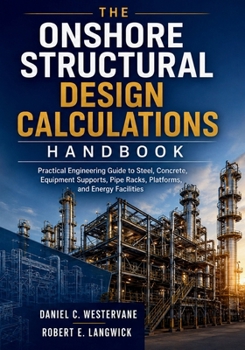
The Onshore Structural Design Calculations Handbook: A Practical Engineering Guide to Steel, Concrete, Equipment Supports, Pipe Racks, Platforms, and

TURN COMPLEX INDUSTRIAL LOADS INTO PRACTICAL STRUCTURAL DESIGN DECISIONS
Industrial structures present challenges that ordinary building design does not. Equipment reactions, piping loads, thermal effects, wind, seismic forces, access requirements, vibration, and demanding operating conditions must all be translated into safe and practical structural solutions.
The Onshore Structural Design Calculations Handbook provides a calculation-focused approach to the analysis and design of structures used across energy, process, and industrial facilities.
Inside, you'll learn how to:
Establish design loads and evaluate critical load combinationsApproach steel and reinforced-concrete structural calculations systematicallyAnalyze pipe racks, platforms, frames, and equipment-support structuresEvaluate beams, columns, bracing, connections, and load pathsAddress concentrated equipment reactions and operational loadingConsider wind, seismic, thermal, and serviceability effectsDevelop practical structural solutions for industrial applicationsConnect engineering calculations with constructability and real facility requirementsRather than presenting isolated formulas, this handbook emphasizes how loads move through industrial structures and how calculation results translate into engineering decisions.
Ideal for structural engineers, civil engineers, industrial-project designers, EPC professionals, graduate engineers, and technical students working with energy, petrochemical, processing, manufacturing, and other onshore facilities.
Whether you are developing a new structure, checking an existing design, or strengthening your industrial structural-engineering knowledge, this handbook provides a practical framework for approaching complex calculations with greater clarity and confidence.
Build a stronger foundation for real-world industrial structural design-add The Onshore Structural Design Calculations Handbook to your professional engineering library today.
Customer Reviews
ThriftBooks ® and the ThriftBooks ® logo are registered trademarks of Thrift Books Global, LLC
