


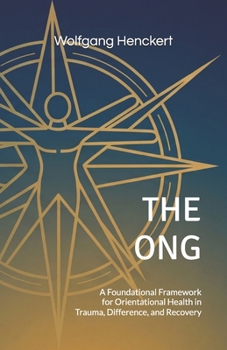
The Ong: A Foundational Framework for Orientational Health in Trauma, Difference, and Recovery

What if many forms of trauma, burnout, emotional dysregulation, and neurodivergent distress are not signs of damage, but signs of misorientation?
THE ONG introduces a radically human framework for understanding psychological strain, trauma, and recovery without pathologising difference or reducing people to diagnoses. Rather than focusing on symptoms, narratives, or techniques, this book centres on a more fundamental question: how human systems orient to reality, strain, and return.
At the heart of the framework is orientation - an innate, embodied capacity that precedes cognition, identity, memory, and self-regulation. When orientation is supported, strain resolves naturally. When return is repeatedly prevented, systems adapt in order to function, often at the cost of long-term coherence. Trauma, from this perspective, is not defined by what happened, but by what could not settle afterwards.
Drawing on decades of clinical observation, systems thinking, and lived experience, Wolfgang Henckert reframes trauma as failed recovery, neurodivergence as difference in orientational fidelity, and healing as the restoration of coherence rather than correction of the self. The book introduces the ONG Compass, a simple but profound way of understanding how sensory contact, emotional timing, relational clarity, and capacity interact to maintain or erode coherence across childhood, adulthood, relationships, and social systems.
Importantly, THE ONG is not a method. It offers no techniques, exercises, or in-the-moment interventions. Instead, it provides a clear orientational logic that explains why many well-intentioned approaches fail under load - and why reduction, pacing, and reliable repair matter more than insight, regulation, or effort during acute strain.
Written for clinicians, educators, caregivers, and reflective readers alike, this book quietly challenges dominant deficit-based models of trauma and neurodiversity while remaining grounded, accessible, and ethically precise.
This is not a book about fixing yourself.
It is a book about recognising what has been intact all along.
Customer Reviews
ThriftBooks ® and the ThriftBooks ® logo are registered trademarks of Thrift Books Global, LLC
