


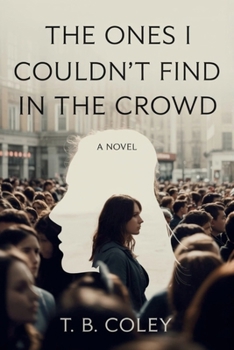
The Ones I Couldn't Find in the Crowd

In a life shaped by abandonment, Talia learned one rule early: survive alone. She became the reliable one-the fixer, the protector, the woman who never asks for help because help never came. But when her teenage sister, Nia, becomes entangled with a controlling older man who refuses to accept "no," Talia is forced to do what she's avoided her whole life: bring the truth into the light, involve the law, and risk being judged by the very people who should have stood beside her.
As the situation escalates-from threats at the doorstep to the pressure of a courthouse hearing-Talia's greatest battle isn't only with the man stalking their peace. It's with the legacy inside her: the belief that needing people is weakness, that love must be paid for with labor, and that safety only exists when you carry everything yourself.
Enter Imani, the steady friend Talia never knew she deserved-unapologetically present, emotionally grounded, and unwilling to let Talia keep bleeding in silence. And then Micah, a calm, respectful presence who offers protection without control and consistency without strings. Together, they help Talia and Nia build what they've never had: boundaries, support, and a home that feels safe-inside and out.
This is a story about breaking cycles:
- breaking the cycle of silence that protects harm,
- breaking the cycle of "strong" that means suffering alone,
- breaking the cycle of relationships that demand you shrink to be loved.
At its heart, the novel is a quiet, powerful transformation-one woman learning that the people she's always searched for in a crowd aren't found by luck. They're built through truth, courage, and choosing herself.
Themes: resilience, sisterhood, trauma recovery, boundaries, emotional safety, community, self-worth, and the courage to receive love without earning it through pain.
Customer Reviews
ThriftBooks® and the ThriftBooks® logo are registered trademarks of Thrift Books Global, LLC
