


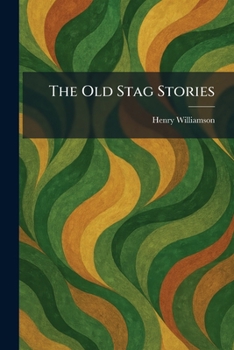
The Old Stag Stories

Select Format
Select Condition 
Book Overview
"The Old Stag Stories" is an evocative collection of nature-themed narratives that delve into the complex lives of wildlife within the British landscape. Through a series of interconnected tales, the work explores the raw beauty and the unforgiving reality of the natural world, centering on the majestic and tragic life of a red deer stag. Henry Williamson employs a unique blend of keen naturalist observation and poetic prose to bring the moors and forests of the West Country to life, offering readers an immersive experience into the rhythms of the wild.
The stories within this volume extend beyond the titular stag to include a variety of forest and field dwellers, from foxes to birds of prey. Each piece captures the instinctual struggles for survival, the changing of the seasons, and the profound connection between the earth and its creatures. Williamson's writing is characterized by a deep empathy for his subjects, eschewing sentimentality in favor of a vivid, authentic portrayal of animal behavior and the environment.
As a significant contribution to early 20th-century nature literature, "The Old Stag Stories" stands as a powerful testament to the tradition of outdoor writing. It remains a compelling read for those interested in the natural history of Britain and the timeless interplay between man, animal, and the wilderness.
This work has been selected by scholars as being culturally important, and is part of the knowledge base of civilization as we know it. This work was reproduced from the original artifact, and remains as true to the original work as possible. Therefore, you may see the original copyright references, library stamps (as most of these works have been housed in our most important libraries around the world), and other notations in the work.
This work is in the public domain in the United States of America, and possibly other nations. Within the United States, you may freely copy and distribute this work, as no entity (individual or corporate) has a copyright on the body of the work.
As a reproduction of a historical artifact, this work may contain missing or blurred pages, poor pictures, errant marks, etc. Scholars believe, and we concur, that this work is important enough to be preserved, reproduced, and made generally available to the public. We appreciate your support of the preservation process, and thank you for being an important part of keeping this knowledge alive and relevant.
Related Subjects
NatureCustomer Reviews
ThriftBooks ® and the ThriftBooks ® logo are registered trademarks of Thrift Books Global, LLC
