


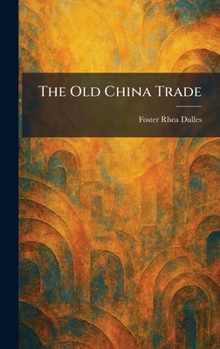
The Old China Trade

"The Old China Trade" offers a comprehensive and engaging history of the early commercial relations between the United States and the Far East. Written by Foster Rhea Dulles, this work chronicles the adventurous spirit of American merchants who, shortly after the Revolutionary War, sought new markets in the mysterious ports of the Orient. Beginning with the pioneering voyage of the "Empress of China" in 1784, the narrative follows the expansion of American trade from New York and Salem to the bustling hongs of Canton.
Dulles explores the various commodities that drove this lucrative exchange, from sea otter furs and sandalwood to the highly prized cargoes of tea, silk, and porcelain. The book details the life of the traders in their restricted quarters, the challenges of navigating the treacherous seas, and the development of the legendary clipper ships. By examining the diplomatic and economic foundations of these early interactions, "The Old China Trade" illustrates how these maritime ventures helped shape the fledgling nation's global influence and economic prosperity. This account remains a vital resource for understanding the origins of Sino-American relations and the golden age of American sailing ships.
This work has been selected by scholars as being culturally important, and is part of the knowledge base of civilization as we know it. This work was reproduced from the original artifact, and remains as true to the original work as possible. Therefore, you may see the original copyright references, library stamps (as most of these works have been housed in our most important libraries around the world), and other notations in the work.
This work is in the public domain in the United States of America, and possibly other nations. Within the United States, you may freely copy and distribute this work, as no entity (individual or corporate) has a copyright on the body of the work.
As a reproduction of a historical artifact, this work may contain missing or blurred pages, poor pictures, errant marks, etc. Scholars believe, and we concur, that this work is important enough to be preserved, reproduced, and made generally available to the public. We appreciate your support of the preservation process, and thank you for being an important part of keeping this knowledge alive and relevant.
Customer Reviews
ThriftBooks ® and the ThriftBooks ® logo are registered trademarks of Thrift Books Global, LLC
