


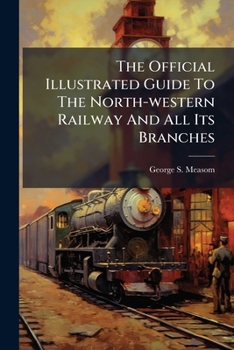
The Official Illustrated Guide To The North-western Railway And All Its Branches

The Official Illustrated Guide To The North-western Railway And All Its Branches, with Descriptions Of The Most Important Manufactories In The Large Towns On The Lines, offers a fascinating glimpse into the Victorian era of railway travel and industrial progress. Authored by George S. Measom, this meticulously detailed guide explores the extensive network of the North-western Railway, providing travelers and historians alike with a comprehensive overview of the routes and the bustling towns they connected.
Beyond mere transportation, the book delves into the heart of industrial Britain, showcasing the significant manufactories that thrived along the railway lines. Readers will discover detailed descriptions of these factories, offering insight into the economic and technological landscape of the time.
This guide is a valuable resource for anyone interested in railway history, industrial heritage, or the social and economic developments of 19th-century Britain. Its blend of travelogue and industrial survey makes it a unique and informative read, capturing the spirit of an era defined by innovation and expansion.
This work has been selected by scholars as being culturally important, and is part of the knowledge base of civilization as we know it. This work was reproduced from the original artifact, and remains as true to the original work as possible. Therefore, you will see the original copyright references, library stamps (as most of these works have been housed in our most important libraries around the world), and other notations in the work.
This work is in the public domain in the United States of America, and possibly other nations. Within the United States, you may freely copy and distribute this work, as no entity (individual or corporate) has a copyright on the body of the work.
As a reproduction of a historical artifact, this work may contain missing or blurred pages, poor pictures, errant marks, etc. Scholars believe, and we concur, that this work is important enough to be preserved, reproduced, and made generally available to the public. We appreciate your support of the preservation process, and thank you for being an important part of keeping this knowledge alive and relevant.
Related Subjects
TransportationCustomer Reviews
ThriftBooks ® and the ThriftBooks ® logo are registered trademarks of Thrift Books Global, LLC
