


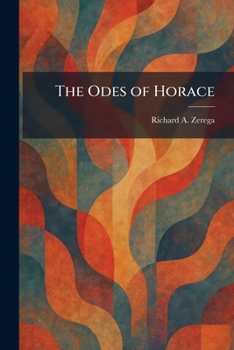
The Odes of Horace

Select Format
Select Condition 
Book Overview
"The Odes of Horace" represents one of the pinnacles of Latin lyric poetry, capturing the essence of the Augustan Age in Rome. This collection, rendered into English verse by Richard A. Zerega, brings the timeless wisdom and stylistic elegance of Quintus Horatius Flaccus to life for the reader. The odes cover a vast array of themes, including love, friendship, the beauty of nature, and the virtues of a balanced life-often summarized by the famous philosophical command carpe diem.
Horace's work is celebrated for its technical mastery, philosophical depth, and its profound influence on the Western literary tradition. From political reflections to personal meditations on mortality and the passing of time, these poems offer a window into the intellectual and cultural life of ancient Rome. This translation strives to preserve the evocative imagery of the original Latin verses, making the classic accessible for students of literature and history alike. The odes remain essential reading for anyone interested in the foundations of European poetry and the enduring legacy of classical antiquity.
This work has been selected by scholars as being culturally important, and is part of the knowledge base of civilization as we know it. This work was reproduced from the original artifact, and remains as true to the original work as possible. Therefore, you may see the original copyright references, library stamps (as most of these works have been housed in our most important libraries around the world), and other notations in the work.
This work is in the public domain in the United States of America, and possibly other nations. Within the United States, you may freely copy and distribute this work, as no entity (individual or corporate) has a copyright on the body of the work.
As a reproduction of a historical artifact, this work may contain missing or blurred pages, poor pictures, errant marks, etc. Scholars believe, and we concur, that this work is important enough to be preserved, reproduced, and made generally available to the public. We appreciate your support of the preservation process, and thank you for being an important part of keeping this knowledge alive and relevant.
Related Subjects
History Literary Literary Criticism & Collections Literature Literature & Fiction PoetryCustomer Reviews
ThriftBooks ® and the ThriftBooks ® logo are registered trademarks of Thrift Books Global, LLC
