


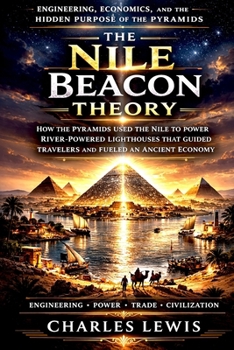
The Nile Beacon Theory
No Customer Reviews

Step into a world of ancient mystery and engineering brilliance with "The Nile Beacon Theory" by Charles Lewis. This thought-provoking work challenges the long-held "tomb narrative" of Egypt's pyramids, inviting readers to reconsider these colossal structures not just as silent repositories for the dead, but as active, functional components of a sophisticated civilization.
About the Book: For centuries, the prevailing view has been that the pyramids were primarily elaborate tombs. While Charles Lewis acknowledges their spiritual and funerary roles, he argues that this narrative is incomplete from an engineering and systems perspective. The Nile Beacon Theory presents a radical multidisciplinary inquiry-weaving together archaeology, material science, and physics-to propose that these monuments served vital practical functions for the living. Key Highlights & Theories The Nile Beacon Theory: Lewis posits that the pyramids, originally encased in polished, dazzlingly white Tura limestone, acted as monumental lighthouses. Strategically placed along the Nile, they provided unmistakable points of reference for river traffic and desert caravans, especially during the treacherous annual inundations. Engineering and Systems Mastery: The book explores the pyramids as the apex of ancient "systems engineering," highlighting the Egyptians' mastery of logistics, surveying, and hydraulic management. Hydraulic & Economic Engines: Lewis investigates the possibility that pyramid complexes were landscape-scale interventions designed to manage Nile floodwaters and serve as economic hubs for the Old Kingdom. Science of Resonance and Light: Delve into the technical details of the pyramids' internal architecture, exploring theories of piezoelectricity, acoustics, and the manipulation of light and sound. A Unified Purpose: Discover how the sacred and the practical were harmoniously integrated, with the pyramids serving as "celestial machines" that anchored both the pharaoh's eternal journey and the state's daily operations. Inside the Chapters: Rethinking the Pyramids: Examining the origins and limits of the conventional tomb theory.The Engineering Marvel: Analyzing the structural stability and precision of these landmarks.
Navigating the Darkness: The core of the Nile Beacon Theory and the role of the polished casing.
The Pyramid Network: How signaling geography and strategic placement guided a civilization.
Operation and Purpose: A deep dive into the potential use of fire, reflection, and synchronized signaling systems. "The Nile Beacon Theory" is a must-read for the intellectually curious, history enthusiasts, and anyone who looks at the Giza plateau and sees not just tombs, but the blueprints of a civilization that mastered its environment and reached for the stars.
Format:Paperback
Language:English
ISBN:B0GRJBQ3B6
ISBN13:9798250953863
Release Date:March 2026
Publisher:Independently published
Length:528 Pages
Weight:1.55 lbs.
Dimensions:9.0" x 1.2" x 6.0"
Customer Reviews
0 rating
Copyright © 2026 Thriftbooks.com Terms of Use
| Privacy Policy | Do Not
Sell/Share My Personal Information | Cookie Policy | Cookie Preferences | Accessibility Statement
ThriftBooks® and the ThriftBooks® logo are registered trademarks of Thrift Books Global, LLC
ThriftBooks® and the ThriftBooks® logo are registered trademarks of Thrift Books Global, LLC
