


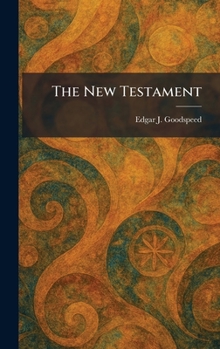
The New Testament

"The New Testament" as translated by Edgar J. Goodspeed is a landmark achievement in biblical scholarship, designed to present the foundational texts of Christianity in clear, modern American English. Shifting away from the formal, often archaic language of earlier versions, Goodspeed sought to mirror the direct and colloquial nature of the original Koine Greek. His work ensures that the message of the scriptures remains accessible and resonant for contemporary readers without sacrificing historical or theological integrity.
This volume encompasses the four Gospels, the Acts of the Apostles, the Pauline and General Epistles, and the Book of Revelation. By focusing on the linguistic nuances of the first century, Goodspeed provides a fresh perspective on the life of Jesus, the teachings of the apostles, and the formation of the early Christian Church. This translation is highly valued for its readability and its dedication to capturing the spirit of the original authors. It serves as an indispensable resource for students, scholars, and anyone interested in the literary and spiritual heritage of the New Testament.
This work has been selected by scholars as being culturally important, and is part of the knowledge base of civilization as we know it. This work was reproduced from the original artifact, and remains as true to the original work as possible. Therefore, you may see the original copyright references, library stamps (as most of these works have been housed in our most important libraries around the world), and other notations in the work.
This work is in the public domain in the United States of America, and possibly other nations. Within the United States, you may freely copy and distribute this work, as no entity (individual or corporate) has a copyright on the body of the work.
As a reproduction of a historical artifact, this work may contain missing or blurred pages, poor pictures, errant marks, etc. Scholars believe, and we concur, that this work is important enough to be preserved, reproduced, and made generally available to the public. We appreciate your support of the preservation process, and thank you for being an important part of keeping this knowledge alive and relevant.
Customer Reviews
ThriftBooks ® and the ThriftBooks ® logo are registered trademarks of Thrift Books Global, LLC
