


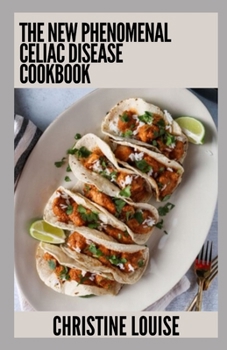
The New Phenomenal Celiac Disease Cookbook: Essential Guide With Healthy Recipes

Celiac disease is an autoimmune condition that causes severe damage to the lining of the small intestine. Gluten - a protein found in wheat, barley, and rye - triggers its symptoms. There's currently no cure for celiac disease. A strict gluten-free diet - also known as the celiac disease diet - must be followed to allow your body to heal. If you have celiac disease and consume even small amounts of gluten, damage to your intestines will continue, regardless of the absence of symptoms. For those with celiac disease, avoiding gluten is essential but can be harder than it seems. This book reviews the benefits of the celiac disease diet and provides lists of foods to eat and avoid, as well as a sample menu, helpful tips with numerous recipes. For people with celiac disease, an autoimmune disease that's triggered by eating gluten (a protein found in wheat, barley, and rye), news of a diagnosis can at once be a relief and a huge burden. It may be a relief because it can take up to a decade to get the accurate diagnosis, and a burden because now it's up to you to change your lifestyle to control the disease. Celiac disease is not gluten intolerance or sensitivity - conditions that are often confused for one another or assumed to be one in the same. "Gluten intolerance and sensitivity have been used interchangeably.
Customer Reviews
ThriftBooks® and the ThriftBooks® logo are registered trademarks of Thrift Books Global, LLC
