
Skip to content
Scan a barcode
Scan
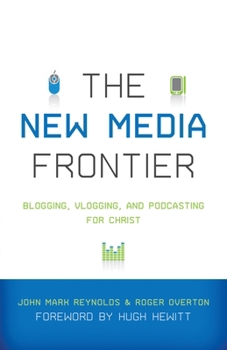
Paperback The New Media Frontier: Blogging, Vlogging, and Podcasting for Christ Book

ISBN: 1433502119

ISBN13: 9781433502118

The New Media Frontier: Blogging, Vlogging, and Podcasting for Christ

Select Format

Select Condition ThriftBooks Help Icon

Recommended

Format: Paperback

Condition: Very Good

$6.29
Save $18.71!
List Price $25.00
Almost Gone, Only 1 Left!
Save to List

Book Overview

A Pew Study reports that only 2% of America's twelve million bloggers claim "religion, spirituality or faith" as their main topic. This leaves a great mission field in cyberspace, say contributors to The New Media Frontier, because the latest forms of communication present so many opportunities to promote the cause of Christ in other topics and fields. Before blindly jumping in, however, Christians need to weigh the possibilities against the consequences, and then proceed with the practical discernment and grace this book provides.

With a foreword by national radio host Hugh Hewitt-who has been at the forefront of the new media movement among Christians-editors Roger Overton and John Mark Reynolds (along with an impressive list of other new media experts) survey the current landscape and explore specific areas in which God's people can creatively expand their reach to a lost world. By stressing the urgency for Christian involvement, unearthing the dangers, and advising readers on how to use this media with different audiences, this book equips believers to advance, demonstrate, and utilize the Christian worldview in this exciting realm.

Customer Reviews

5 ratings

Five stars for what it is, but only two for what I expected it to be

This is a very BASIC book. If you have experience at all with teh interwebz, you will not learn much new. Nonetheless, there are some insights, both good and poor, that are springboards for discussion. I will be using this book as part of a presentation on Christians and Social Networking and will will those insights of both categories as talking points. What I disliked was the constant assumption that "in person" is inherently better than the electronic medium. Have we ever met the Apostle Paul? Perhaps it is my sensitivity to the self-righteous attitude of some Christians to internet fellowship as second-class, but that tone left a bad taste in my mouth. Maybe I am just used to be being on the bleeding edge, but I find it somewhat hard to believe that the Christian community is so Luddite that such a basic book is necessary. And the Amish don't care about new media.

A great new media primer

I just finished reading The New Media Frontier: Blogging, Vlogging, and Podcasting for Christ yesterday, and I think this book is a terrific primer for Christians hoping to better understand new media. The breadth of topics covered in the book virtually ensures that just about anyone who reads it will find something relevant to their lives and ministries, while few will find that every chapter is relevant to them. As somewhat of a new media newbie, I found the book to be very helpful. Also, as a pastor, the book helped me understand various ways to integrate new media into my work in ministry. The book is broken into two sections, and from there into a total of 15 chapters written by several different authors. The first section is called The Landscape of the New Media. It outlines the current state of new media, forecasts about its future, warns of the potential dangers of embracing it uncritically, and then offers some beginners some tips on entering the world(s) of blogging and podcasting. I began reading this book expecting it to be one big commercial for new media, but was pleasantly surprised by how balanced it was. Several chapters emphasized the importance of embracing the new media world discerningly (particularly Matthew Lee Anderson's chapter on the dangers of uncritically embracing new media), and the overall message of the book seemed to be that Christians must engage the new media world, but that they must do so with caution. Chapters 4 and 5 of the book basically provide everything that a new media greenhorn needs to gain a basic understanding of blogging and podcasting. Despite the massive popularity of both blogs and podcasts, they remain a mystery to many (especially many in the church world). These chapters did an excellent job of showing how to get started blogging and podcasting. In addition to showing how to set up blogs and podcasts, the chapters also provided some tips on producing high quality content. The authors of these chapters also effectively made the point that Christians should be engaged in blogging and podcasting. The second section of the book is called Engaging New Media and deals with several different potential implications and applications of new media. The chapter of theological blogging shows how the existence of blogs has provided a new forum for discussing and debating theology. This can have both positive and negative implications for theological discourse, and thus must be used with care. Tod Bolsinger's chapter Blogging as Microwave Community discusses the various ways that blogging can aid Christian community. Bolsinger does a good job of showing how blogs can facilitate Christian community without being a replacement for it. The two most helpful chapters for pastors were Mark D. Roberts' chapter Pastors and the New Media, and Rhett Smith's chapter Navigating the Evolving World of Youth Ministry in the Facebook-MySpace Generation. Both Roberts and Smith write from their experience w

Great book

I don't like change. I don't adapt well. I want to keep doing things my own slow way. There's this silly notion circulating out there that the internet has revolutionized media and the way that information is handled and distributed. Who would believe that? I'm stupid for writing that, as I am currently using the technology I am denouncing, sort of like those philosophers that like to use logic to explain away everything, including the logic used to reach their conclusion. Oh well, I guess I can accept it. Anyway, this new book is all about how the internet is revolutionizing the way Christian ministry is being done, at least in terms of the means (media) of how ministry is being done and communicated, for surely no one is breaking new ground in how to help people know the Savior. This is the same across generations because the truth never changes. But ministry in the 21st century with its internet is vastly different than that of olden days, like when Gutenberg unveiled his shiny press and Bibles were printed for the first time in history. Or when the first primitive motion picture camera was invented by Thomas Edison who offered to give the patent to the church, which rejected the generous proposal in swift culturally-retarded fashion (from The History Channel's documentary The Passion: Religion and the Movies). As some would say, the methods have changed, but the message stays the same. That's not to say that the medium doesn't preach, because it does. This helpful book attempts to draw the line between preserving the message of the Gospel and letting the medium shape the message. The "new media" is the new landscape which the internet has been formed into. This includes the infamous blog, where any schmuck with an opinion (myself included) can broadcast it worldwide in an instant without paying a dime. Never before in history has something so useful, and at the same time so dangerous, come into being. To quote a somewhat cheesy but great movie, "with great power comes great responsibility." It's the same with all potentially useful things. Books can be used to praise God or they can be used to control people. Likewise, the internet can be used for beneficial ministry or it can be the breeding grounds for sex offenders (watch Law and Order). This book points out the tremendous potential for good to be done through the "new media", while staunchly warning against its misuse. I would recommend it to anyone wanting to know more about technology that is shaping our world currently, and specifically its influence on Christian ministry.

A valuable resource

"The New Media Frontier: Blogging, Vlogging, and Podcasting for Christ" is a valuable tool with some great information for beginners. This basic information resource is the work of various authors and editors John Mark Reynolds and Roger Overton. The book has a great techno look to it that draws the reader's eye, and good information to stimulate his thoughts. The glossary is also helpful. In fact, the only complaint that I have about this book is that it's a pain to read in pdf format on the computer!

How to Glorify God with Your Blog

The blogosphere is changing the world. Am I exaggerating? Maybe. After all, there are plenty of people who have never seen a blog. Many people give you a blank stare if you ask them what a "blogger" is. But there is no doubt that the way we obtain information in this Internet age is changing, and the blogosphere is a big part of that information revolution. Blogging has democratized the way we access information. It has also democratized the way we publish information. The New Media Frontier: Blogging, Vlogging and Podcasting for Christ (Crossway, 2008) illuminates the promises and pitfalls of engaging in this new media. Especially helpful is the Christian focus that this book brings to blogging. John Mark Reynolds starts off the book by describing the difference between "live" and "preserved" discourse. He shows how the world has moved from "live" performance to "preserved" performance. Now this pendulum is swinging back towards "live" performance. Maintaing the balance between instant communication and preserved communicatio is of the utmost importance. An interesting phenomena that Reynolds does not address: "live" performance sometimes leads to "preserved" performance. Take American Idol for example - direct performances ("live") that (hopefully) lead to recording contracts ("preserved"). Or the success of bloggers ("live") who wound up writing "preserved" discourse for this book! Matthew Lee Anderson warns us about the blogosphere. He sees a number of deficiencies in online communication and so he points out some dangers that should be avoided. Of primary concern is the way that connecting online is inferior than connecting face to face. Likewise, the emphasis in blogging is on posting and publishing. You cannot simply "be" an online presence. He worries that our souls might become shallow and that we might mistakenly assume we can and should control how we present ourselves to the world. Because this book comes from a variety of bloggers, it contains a wide variety of insights. Technical advice on starting a podcast? See the "Beginner's Toolbox" on podcasting. Want to start a blog? Make sure you read Joe Carter's terrific chapter before you begin. Are you a pastor wanting to facilitate more discussion with your congregation? Then see Mark D. Roberts' chapter (and his blog) for a great model of how it can be done. Thanks to Rhett Smith's chapter on youth ministry, I have now opened a FaceBook account. Otherwise, according to Rhett, I might be unintentionally telling the 20somethings in my Sunday School class that I do not care about their online life. Blogging is changing how pastors relate to their people, how people engage in apologetics for Christian truth, how classrooms and "the academy" relate to one another. The New Media Frontier is a must-have book for all those interested in the current revolution in media intake and output. Get this book. And then get to work glorifying Christ on your blog.
Copyright © 2026 Thriftbooks.com Terms of Use | Privacy Policy | Do Not Sell/Share My Personal Information | Cookie Policy | Cookie Preferences | Accessibility Statement
ThriftBooks ® and the ThriftBooks ® logo are registered trademarks of Thrift Books Global, LLC

GoDaddy Verified and Secured