


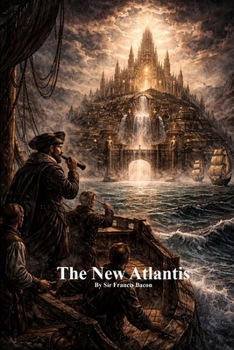
The New Atlantis

A vision of a society guided not by superstition or power, but by knowledge.
In The New Atlantis by Francis Bacon, a group of European sailors, lost at sea, come upon the remote and unknown island of Bensalem-a place unlike any they have encountered before.
Welcomed by its inhabitants, the travellers discover a civilization founded upon order, learning, and a profound commitment to the advancement of knowledge. At the heart of this society stands Salomon's House, an institution devoted to the systematic study of nature and the improvement of human life through scientific inquiry.
As the visitors are gradually introduced to the customs, beliefs, and structures of Bensalem, they witness a vision of what a society might become when guided by reason, discipline, and moral purpose. Rather than a tale of conflict, the narrative unfolds as a philosophical exploration of discovery, innovation, and the responsible use of knowledge.
Incomplete yet enduring, The New Atlantis presents one of the earliest and most influential imaginings of a scientific utopia-where the pursuit of understanding is elevated to the highest good, and where the future is shaped through the careful study of the natural world.
Customer Reviews
ThriftBooks ® and the ThriftBooks ® logo are registered trademarks of Thrift Books Global, LLC
