


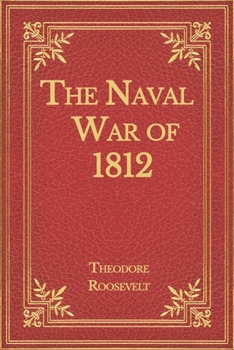
The Naval War of 1812
No Customer Reviews

The view professed by Great Britain in 1812 respecting the rights of belligerents and neutrals was diametrically opposite to that held by the United States. "Between England and the United States of America," writes a British author, "a spirit of animosity, caused chiefly by the impressment of British seamen, or of seamen asserted to be such, from on board of American merchant vessels, had unhappily subsisted for a long time" prior to the war. "It is, we believe," he continues, "an acknowledged maxim of public law, as well that no nation but the one he belongs to can release a subject from his natural allegiance, as that, provided the jurisdiction of another independent state be not infringed, every nation has a right to enforce the services of her subjects wherever they may be found. Nor has any neutral nation such a jurisdiction over her merchant vessels upon the high seas as to exclude a belligerent nation from the right of searching them for contraband of war or for the property or persons of her enemies. And if, in the exercise of that right, the belligerent should discover on board of the neutral vessel a subject who has withdrawn himself from his lawful allegiance, the neutral can have no fair ground for refusing to deliver him up; more especially if that subject is proved to be a deserter from the sea or land service of the former."
Format:Paperback
Language:English
ISBN:B08N9DQBSB
ISBN13:9798562568588
Release Date:January 1
Publisher:Independently Published
Length:500 Pages
Weight:1.60 lbs.
Dimensions:1.1" x 6.0" x 9.0"
Customer Reviews
0 rating
Copyright © 2026 Thriftbooks.com
Terms of Use | Privacy Policy | Do Not Sell/Share My Personal Information | Cookie Notice | Cookie Preferences | Accessibility Statement
ThriftBooks ® and the ThriftBooks ® logo are registered trademarks of Thrift Books Global, LLC
ThriftBooks ® and the ThriftBooks ® logo are registered trademarks of Thrift Books Global, LLC
