The Name of the Rose
Conditions
A readable copy with all pages intact.
Formats
Conditions
A readable copy with all pages intact.
Conditions
A readable copy with all pages intact.
Formats
Conditions
A readable copy with all pages intact.
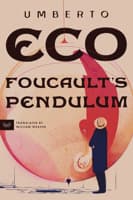
Few cultural critics and novelists carry the scholarly heft of Umberto Eco, who was a noted historian and semiotician before he brought these sensibilites to bear on major novels such as The Name of the Rose and Foucault's Pendulum . Whether he is deconstructing modern wax museums or spinning a 13th-century tale, he is always clever, stately and profound.
This is not a proper review, more a couple of comments about things which the first few reviewers missed (I didn't read all 157 reviews). One of Umberto Eco's perennial themes, expressed elsewhere in essays, is what he sees as the the similarity between the society of the "dark ages" and that of today. For instance he draws explicit parallels between the heretics and utopian communities of the past and contemporary cults such as Jim Jones, the SLA, the Red Brigades and so forth. This book needs to be read in the light of that; it's not just a historical novel about monks. There are also obvious references to the work of Borges in this novel, as well as to Sherlock Holmes (William of Baskerville?). And of course the theme of rationalism versus superstition (not to mention religious war) has been brought into considerably sharper focus by world events since the book was written.Overall, I can't see why people regard this as a hard book to read. Although there is a lot of historical background, (accurate rather than as some have suggested pseudo-philosophical or invented) it's presented in a vivid and entertaining way, the story keeps you turning the pages, and it's surely the only serious novel to include a recipe for fried cheese.
I am amazed that this novel - the most popular, the best-loved, the most imitated in Italy during the latest 20 years- is so little known abroad. It is a very good historical novel, full of intense and fascinating characters, which can reliably belong to European Middle Age. Eco' s culture is immense: he can easily quote from Latin, ancient French or other languages. But the big mystery in this book is an ancient Greek manuscript, the book _On Comedy_ fom Aristotle's _Poetics_. It is very hard to believe that such a manuscript really existed, and, as a matter of fact, at the end of the novel it gets destroyed. A terrible loss for the main character, Guglielmo di Baskerville, but a dreadful victory for superstition and ignorance. Tje plot is very intriguing (it is a detective story). Some friars are murdered, and nobody can understand the reason...nobody excepting Guglielmo. Who is nothing but Sherlock Holmes, while his young assistant, Adso, is nothing but Watson...But the reference to Conan Doyle is not the real purpose of this splendid book, where you find such an enchanting gothic atmosphere as very rarely you can do. The real matter is the rescue of European culture, which nowadays seems to be overwhelmed by the so called 'globalization'. I suggest this reading to everyone, American, Asian or African people. The movie is not so bad...Jean-Jacques Annaud understood very well Eco's lesson. But the book is something very, very special.
The word "name" in Italian is spelled "nome", not "noma". :) btw, I love this book.

Published by Leslie LaRueAugust 6, 2026
Every book lover can recognize a kindred spirit in the pages of a great story. Explore some of literature's most memorable readers, from childhood favorites to modern classics, and celebrate the characters who prove that books have the power to change lives.
Published by Ashly Moore SheldonDecember 13, 2022
The Middle Ages was a time of massive change and upheaval, beset by wars and the plague, making it a rich period for powerful, exciting narratives. Here are twelve of our favorite historical novels set during the Middle Ages.
Published by Ashly Moore SheldonJuly 10, 2020