


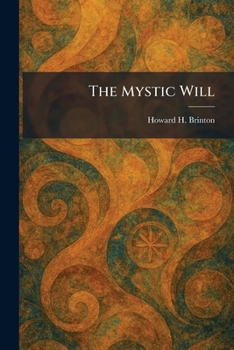
The Mystic Will

"The Mystic Will" is a profound exploration of the philosophical and theological systems of the 17th-century German mystic Jacob Boehme. Written by the esteemed scholar Howard H. Brinton, this work serves as an essential bridge between classical mysticism and modern philosophical thought. Brinton meticulously analyzes Boehme's complex vision of the universe, focusing on the central role of the will in both the divine nature and the human experience.
Through a careful examination of Boehme's unique terminology and symbolic language, "The Mystic Will" elucidates the internal struggle between light and darkness, and the process of spiritual transformation. The book delves into the concept of the 'Ungrund'-the groundless source of all being-and explores how Boehme's ideas influenced later thinkers in the realms of German Idealism and romanticism. Brinton provides a structured and accessible entry point into one of the most enigmatic figures in Western spirituality, making this work invaluable for students of religious history, philosophy, and Christian mysticism. By highlighting the enduring relevance of Boehme's insights into the nature of reality and the human soul, "The Mystic Will" remains a landmark study in the field of mystical philosophy.
This work has been selected by scholars as being culturally important, and is part of the knowledge base of civilization as we know it. This work was reproduced from the original artifact, and remains as true to the original work as possible. Therefore, you may see the original copyright references, library stamps (as most of these works have been housed in our most important libraries around the world), and other notations in the work.
This work is in the public domain in the United States of America, and possibly other nations. Within the United States, you may freely copy and distribute this work, as no entity (individual or corporate) has a copyright on the body of the work.
As a reproduction of a historical artifact, this work may contain missing or blurred pages, poor pictures, errant marks, etc. Scholars believe, and we concur, that this work is important enough to be preserved, reproduced, and made generally available to the public. We appreciate your support of the preservation process, and thank you for being an important part of keeping this knowledge alive and relevant.
Customer Reviews
ThriftBooks ® and the ThriftBooks ® logo are registered trademarks of Thrift Books Global, LLC
