


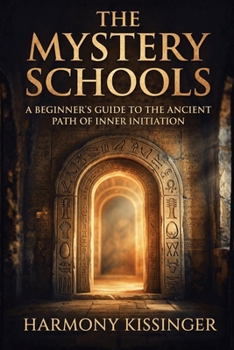
The Mystery Schools: A Beginner’s Guide to the Ancient Path of Inner Initiation

For nearly two thousand years, the ancient mystery schools preserved one of the most sophisticated traditions of inner transformation the Western world has produced.
Eleusis ran continuously for nearly two millennia. Pythagoras founded a disciplined community whose influence shaped the future of philosophy. The Mithraic cult spread across the Roman Empire and left behind hundreds of identifiable temples, inscriptions, and initiatory images. Behind these institutions was a shared conviction: real knowledge was not merely information. It was transformation.
The institutions ended. The work was not extinguished.
The Mystery Schools is a serious and accessible guide to what the ancient mystery traditions actually were, what they taught, and how their methods of inner initiation can still be approached today.
Inside, you will discover:
The full historical substance. Egypt as the mother tradition. The Eleusinian Mysteries in depth. The Orphic gold tablets buried with initiates. The Dionysian rites. Pythagoras, Plato, and the Neoplatonic flowering through Plotinus, Porphyry, Iamblichus, and Proclus. The Roman cult of Mithras and its seven grades of initiation. The complete ecosystem, explained with scholarly rigor and clear, accessible prose.
The interior meaning of initiation. What transformation actually is, why it rarely feels like progress while it is happening, what initiation meant in its proper sense, and how the ancient pattern of purification, illumination, and union appears across the major traditions covered in this book.
Six practices you can begin this week. Stillness. Symbol contemplation. The Pythagorean evening review. Self-inquiry. Contemplative reading. The intonation of the Greek vowels from the late antique theurgic tradition. Each practice is given with concrete instructions, realistic expectations, and the historical sources that preserved it.
Rigorous public-domain sourcing. Every major source used in this book comes from pre-1928 translations and scholarship, including Plutarch, Iamblichus, Porphyry, Plotinus, Jane Harrison, G. R. S. Mead, Thomas Taylor, Franz Cumont, Evelyn Underhill, and William Ralph Inge. No modern speculation passed off as ancient wisdom. No theatrical mystification. No exotic terminology used to disguise what the tradition actually taught.
This book is for readers who are tired of esoteric books that promise secrets and deliver atmosphere. It is for readers who want to understand what the mystery schools actually did, where their methods came from, and how their work can still be approached by a serious person today.
The schools measured transformation in decades, not weekends.
This book shows what they preserved, how they worked, and where the path begins.
Includes a selected glossary of names, terms, and places for readers who wish to return to the material over time.
Customer Reviews
ThriftBooks ® and the ThriftBooks ® logo are registered trademarks of Thrift Books Global, LLC
