


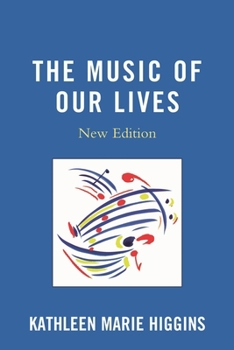
Music of Our Lives

Select Format
Select Condition 
Book Overview
Although many of the world's musical traditions recognize the positive value of music for ethical life, the Western philosophical tradition has largely forgotten this idea. The dominance of formalism in musical aesthetics has encouraged this abandonment of the idea that music has an ethical dimension. Greater attention to musical experience and to the way that context affects the meaning that music has to performers and listeners helps to bring music's ethical potential into focus. In The Music of Our Lives, Kathleen Higgins argues that the arguments that Plato used to defend the ethical value of music are still applicable today. Music encourages ethically valuable attitudes and behavior, provides practice in skills that are valuable in ethical life, and symbolizes ethical ideals and the possibility of interpersonal harmony. In these ways it develops our ability to live well and to think clearly about our ethical situation. Music provides a model for the good human life.
Format:Paperback
Language:English
ISBN:0739120859
ISBN13:9780739120859
Release Date:February 2011
Publisher:Bloomsbury Publishing USA
Length:262 Pages
Weight:0.88 lbs.
Dimensions:0.7" x 6.1" x 8.9"
Customer Reviews
1 rating
Music and ethics
Published by Thriftbooks.com User , 20 years ago
A psychiatrist and amateur cellist, I salute Prof. Higgins for clearing the philosphical brush from the field of ethics and writing a sophisticated but clear and humane book for general readers. I learned much about 19th century thoughts and prejudices (Hanslick, especially), about sclerotic narrowing of philosophical categories, and the liberating but also disciplining aspects of music. Thank you!
Copyright © 2026 Thriftbooks.com
Terms of Use | Privacy Policy | Do Not Sell/Share My Personal Information | Cookie Notice | Cookie Preferences | Accessibility Statement
ThriftBooks ® and the ThriftBooks ® logo are registered trademarks of Thrift Books Global, LLC
ThriftBooks ® and the ThriftBooks ® logo are registered trademarks of Thrift Books Global, LLC
