


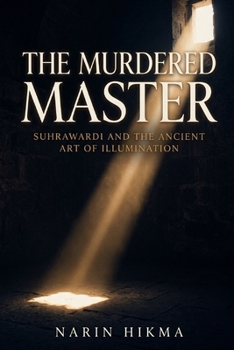
The Murdered Master: Suhrawardi and the Ancient Art of Illumination

How do you go on when the light has gone out of your life?
You know the feeling even if you have never named it. The work that stopped meaning anything. The relationship that broke and did not mend. The stretch of months where you did everything correctly and felt nothing at all. Somewhere in it you started to suspect that the darkness was the truth about you, and everything before it was the illusion.
Eight hundred years ago a Persian philosopher was killed for insisting on the opposite.
His name was Shihab al-Din Yahya al-Suhrawardi, and in 1191 he was executed in the citadel of Aleppo on the order of Saladin, at the request of the jurists of that city, at the age of thirty-six. His crime was what he taught. He had spent a short life arguing that light is not a metaphor for truth but the substance of it, that consciousness is not a late accident in a dead universe but the deepest thing there is, and that the darkness any of us find ourselves in is never the final word about what we are. It is only the outer edge of a light we are already made of.
The Murdered Master is the story of that man and that argument. It follows him from a village in the mountains of northwestern Iran, through the great teaching cities of the medieval Islamic world, into the court of a fifteen-year-old prince who loved him and, four years later, could not save him, to the cell where the philosophy he built was tested under the only conditions that could fully test it. It is a narrative biography, told as a story rather than a study, and it takes his ideas as seriously as his life.
Feel the particular relief of learning that your inner life is not noiseRecognize the difference between knowing about something and being present to itUnderstand why the light you sometimes sense at the edge of things has a philosophy behind itWatch a man hold a conviction when holding it costs him everythingFind, in a twelfth-century argument, a question contemporary philosophy still cannot answerThis is a book for anyone who has been told their longing for something more is a symptom to be managed rather than a direction to be followed.
They killed him in the summer and the dawn came back anyway.
Turn the first page. The light was always already facing you.
Customer Reviews
ThriftBooks ® and the ThriftBooks ® logo are registered trademarks of Thrift Books Global, LLC
