


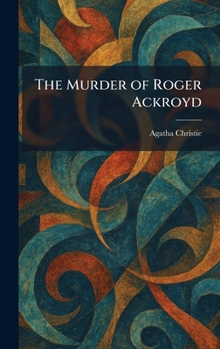
The Murder of Roger Ackroyd

"The Murder of Roger Ackroyd" is a cornerstone of detective fiction and one of the most celebrated works by the legendary Agatha Christie. The story unfolds in the peaceful village of King's Abbot, where the shocking murder of a wealthy country gentleman, Roger Ackroyd, sends ripples through the community. Found dead in his locked study, Ackroyd's demise follows the mysterious suicide of a local widow, sparking rumors of blackmail and hidden scandals.
The investigation marks the return of the incomparable Hercule Poirot, who has retired to the countryside to live a life of quiet anonymity. Accompanied by the local physician, Dr. James Sheppard, Poirot applies his legendary "little grey cells" to a household of suspects, each possessing their own secrets and motives for wanting Ackroyd silenced. From disgruntled relatives to suspicious servants, no one is above suspicion in this intricate puzzle.
This novel is widely regarded as a revolutionary achievement in the mystery genre, famous for its brilliant subversion of narrative expectations and its masterful construction. "The Murder of Roger Ackroyd" remains an essential read for fans of the Golden Age of mystery, offering a timeless exploration of guilt, deception, and the pursuit of truth.
This work has been selected by scholars as being culturally important, and is part of the knowledge base of civilization as we know it. This work was reproduced from the original artifact, and remains as true to the original work as possible. Therefore, you may see the original copyright references, library stamps (as most of these works have been housed in our most important libraries around the world), and other notations in the work.
This work is in the public domain in the United States of America, and possibly other nations. Within the United States, you may freely copy and distribute this work, as no entity (individual or corporate) has a copyright on the body of the work.
As a reproduction of a historical artifact, this work may contain missing or blurred pages, poor pictures, errant marks, etc. Scholars believe, and we concur, that this work is important enough to be preserved, reproduced, and made generally available to the public. We appreciate your support of the preservation process, and thank you for being an important part of keeping this knowledge alive and relevant.
Customer Reviews
ThriftBooks ® and the ThriftBooks ® logo are registered trademarks of Thrift Books Global, LLC
