


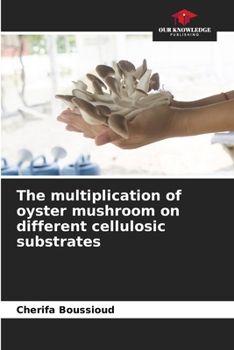
The multiplication of oyster mushroom on different cellulosic substrates
No Customer Reviews

The estimated number of fungi worldwide is about 140,000, of which only 10% are known, or ≈ 14,000 species. Fungi are an integral part of most natural ecosystems, contributing to the redistribution of food resources used by all organisms in the environment. Many fungal species are of interest in human nutrition and health. More than 2000 species are edible, and nearly 700 species have interesting pharmaceutical properties. Nutritionally, edible forest fungi are rich in protein and fiber, low in lipids, and contain important vitamins and trace elements (Barros et al., 2007; Reis et al., 2012). They are eukaryotic organisms, i.e., possessing cells with an individualized nucleus provided with a nuclear membrane, chromosomes, nucleolus and mitochondrial apparatus. They have a thick peptido-polyosidic wall, of variable composition depending on the group (Mannans, Glucans, Chitin, Chitosan, proteins, phospholipids) and a sterol-rich membrane (ergosterols).
Format:Paperback
Language:English
ISBN:6204152955
ISBN13:9786204152950
Release Date:October 2021
Publisher:Our Knowledge Publishing
Length:52 Pages
Weight:0.20 lbs.
Dimensions:0.1" x 6.0" x 9.0"
Customer Reviews
0 rating
Copyright © 2026 Thriftbooks.com Terms of Use
| Privacy Policy | Do Not
Sell/Share My Personal Information | Cookie Policy | Cookie Preferences | Accessibility Statement
ThriftBooks® and the ThriftBooks® logo are registered trademarks of Thrift Books Global, LLC
ThriftBooks® and the ThriftBooks® logo are registered trademarks of Thrift Books Global, LLC
