


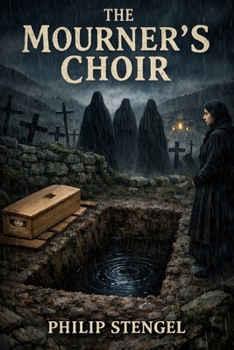
The Mourner's Choir

In the mountain village of Mărunțel, grief is not private. It is ritual, structure, and survival. When six-year-old Ileana dies after a wasting illness, her burial should close the wound. Instead, something beneath the valley answers. The mourners lose the sharpness of sorrow. The funeral collapses into an impossible harmony. And from that day forward, the village begins learning a new order of grief, one that strips memory, thins identity, and leaves the living easier to inhabit.
Scholar Daniel Ward comes to Mărunțel chasing fragments of forbidden ritual lore, old monastic warnings, and the name of the Pl ngătorii Vechi, the Ancient Mourners. What he finds is worse than a haunting. The valley is a machine built from uncontained sorrow, sustained across generations by counterfeit returns, altered memory, and a first catastrophe rooted in one mother's refusal to let the dead remain singularly dead.
As Daniel descends into the valley's buried system, he uncovers a horror that does not feed on flesh first. It feeds on what love leaves behind. The Mourner's Choir is gothic folkloric horror about grief as appetite, memory as battleground, and the terror of realizing that some communities do not survive tragedy by healing. They survive by being hollowed into continuance.
Customer Reviews
ThriftBooks ® and the ThriftBooks ® logo are registered trademarks of Thrift Books Global, LLC
