


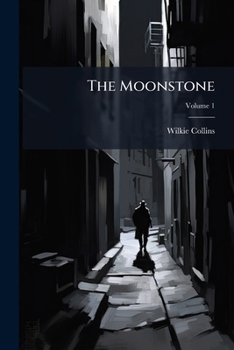
The Moonstone; Volume 1

Select Format
Select Condition 
Book Overview
"The Moonstone" by Wilkie Collins, a cornerstone of detective fiction, masterfully blends suspense, romance, and social commentary. When a priceless yellow diamond, the Moonstone, is stolen from Rachel Verinder's possession on her eighteenth birthday, suspicion and intrigue envelop a cast of memorable characters. Sergeant Cuff, an early prototype of the modern detective, is called in to unravel the mystery, but his unconventional methods only deepen the confusion. As the investigation unfolds, secrets, red herrings, and complex relationships are revealed, showcasing Collins's skill at crafting intricate plots and compelling characters.
This classic novel explores themes of colonialism, addiction, and the clash between Eastern and Western cultures, all while delivering a thrilling and suspenseful read. "The Moonstone" remains a significant work of Victorian literature, admired for its innovative narrative structure and its enduring exploration of human nature under pressure. A must-read for fans of mystery and classic literature alike.
This work has been selected by scholars as being culturally important, and is part of the knowledge base of civilization as we know it. This work was reproduced from the original artifact, and remains as true to the original work as possible. Therefore, you will see the original copyright references, library stamps (as most of these works have been housed in our most important libraries around the world), and other notations in the work.
This work is in the public domain in the United States of America, and possibly other nations. Within the United States, you may freely copy and distribute this work, as no entity (individual or corporate) has a copyright on the body of the work.
As a reproduction of a historical artifact, this work may contain missing or blurred pages, poor pictures, errant marks, etc. Scholars believe, and we concur, that this work is important enough to be preserved, reproduced, and made generally available to the public. We appreciate your support of the preservation process, and thank you for being an important part of keeping this knowledge alive and relevant.
Related Subjects
HistoryCustomer Reviews
ThriftBooks® and the ThriftBooks® logo are registered trademarks of Thrift Books Global, LLC
