


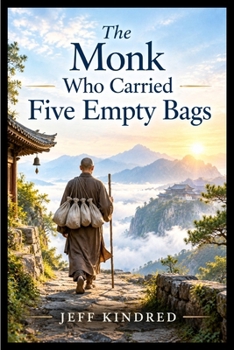
The Monk Who Carried Five Empty Bags

Julian Mercer is a young monk at Mount Aveline who lives under severe discipline and believes that by controlling the body, feelings, and mind, he can escape suffering. Abbot Cedric Kingsley gives Julian five heavy but empty hemp bags and instructs him to carry them as a koan. Each bag gradually becomes associated with a different aspect of experience: the body, feelings, memories and perceptions, volitional tendencies, and finally the very idea of an observer standing behind all experience. The more Julian tries to endure and understand everything through reason, the more clearly he sees that the real weight is not physical. It comes from possession: he continually turns the body, feelings, memories, intentions, and consciousness into "my body," "my feelings," "my thoughts," and ultimately "me." As each bag is opened and its contents are recognized and released, it becomes lighter. Yet the lesson is not to destroy the aggregates or discover a purer version of the self. Julian must confront the deeper possibility that even the one who seems to be observing experience is not an independent, permanent entity. Encounters with Asher and other members of the monastery reveal the difference between outward discipline and inner freedom. Julian gradually stops fighting his feelings, judging his body, and searching for a secure position outside the changing flow of experience. At the climax, all five bags are completely opened. Inside the final bag he does not find a hidden, eternal self, but only conditions and experiences arising and passing away. This emptiness first shocks Julian, but it also frees him from the need to imagine a permanent person who must carry the burden. In the ending, Julian leaves Mount Aveline with the bags empty. He does not descend with a new doctrine or construct another identity for himself. Instead, he walks into the world with empty hands and a willingness to live without controlling everything. The five bags therefore become a metaphor for releasing attachment: letting go does not mean abandoning life, but stopping the habit of treating any part of experience as a fixed self. Julian's journey also reveals a central paradox: the harder he tries to escape experience, the stronger he makes the person who wants to escape. Only when there is no longer a self that needs to win does the final bag truly become empty.
Customer Reviews
ThriftBooks ® and the ThriftBooks ® logo are registered trademarks of Thrift Books Global, LLC
