


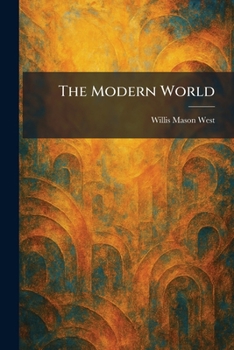
The Modern World

Select Format
Select Condition 
Book Overview
"The Modern World" offers a comprehensive and analytical examination of the historical forces that shaped the contemporary era. This work explores the evolution of civilization from the transition out of the medieval period through the transformative epochs of the Renaissance, the Reformation, and the Age of Enlightenment. With a particular focus on the rise of democratic institutions and the profound impact of the Industrial Revolution, the text meticulously traces the political, social, and economic developments that redefined global society.
The narrative provides a detailed look at the major conflicts and intellectual movements that catalyzed the shift toward modernity, including the French Revolution and the subsequent growth of nationalism across Europe. The author's scholarly approach emphasizes the interconnectedness of international events, offering readers a clear understanding of how past struggles for liberty and progress laid the groundwork for the 20th-century world order. "The Modern World" remains a significant contribution to historical literature, prized for its clarity and its ability to synthesize complex global transitions into a cohesive and engaging educational resource for students and history enthusiasts alike.
This work has been selected by scholars as being culturally important, and is part of the knowledge base of civilization as we know it. This work was reproduced from the original artifact, and remains as true to the original work as possible. Therefore, you may see the original copyright references, library stamps (as most of these works have been housed in our most important libraries around the world), and other notations in the work.
This work is in the public domain in the United States of America, and possibly other nations. Within the United States, you may freely copy and distribute this work, as no entity (individual or corporate) has a copyright on the body of the work.
As a reproduction of a historical artifact, this work may contain missing or blurred pages, poor pictures, errant marks, etc. Scholars believe, and we concur, that this work is important enough to be preserved, reproduced, and made generally available to the public. We appreciate your support of the preservation process, and thank you for being an important part of keeping this knowledge alive and relevant.
Related Subjects
HistoryCustomer Reviews
ThriftBooks ® and the ThriftBooks ® logo are registered trademarks of Thrift Books Global, LLC
