


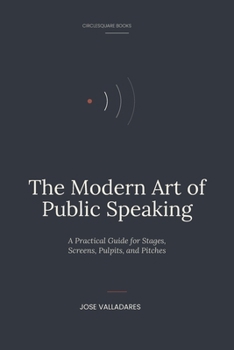
The Modern Art of Public Speaking

Most public-speaking advice is written for the keynote stage. That is not the room most of us stand in. The room we stand in is the Tuesday board meeting, the all-hands on Zoom, the wedding toast next month, the sales pitch on Friday, the eulogy on Saturday - the ordinary, consequential speaking that decides whether the project ships, the deal closes, the family copes, or the team aligns.
The Modern Art of Public Speaking is a practical guide to the speaking that actually fills a working life. It is built on six recurring concerns every speaker handles, every time, in every format: audience, message, structure, delivery, presence, and practice. Twenty-one chapters apply that framework to the rooms working professionals actually stand in.
What's insideFoundations - what public speaking actually is, how to read an audience, the relationship between message and structure, and the basics of voice and body.The toolkit - openings, storytelling, persuasion, closings, Q&A under pressure, and slides that support the speaker instead of competing with the message.Fear and presence - stage fright treated seriously as biology, with a thirty-day exposure program for building steadier composure.Modern contexts - video calls, podcasts, sales pitches, sermons, toasts and eulogies, teaching, panels, and workshops.The long arc - a fifteen-to-thirty-minute weekly practice that compounds across years, and what speaking looks like over the course of a career. Plus practical toolsPre-event checklists for an in-person talk, video call, sales pitch, and sermon.A thirty-day fear-reduction program.A short, honest reading list of books worth returning to. What this book is notIt is not a book of inspiration. It will not tell the reader to be bold, authentic, or fearless. Those words do no work. It is not a parsing of famous speeches - your situation is not Steve Jobs's, and the great orators have been quoted into exhaustion by other books. It is not a bag of tips, because a list of thirty-seven things to do with your hands is not a skill. The book is organized around principles that generate behavior, not behaviors to memorize.
Who it is forWorking professionals who need to speak well in difficult rooms - managers, founders, clergy, teachers, salespeople, and anyone whose work requires standing up and saying something that matters. A reader with a board presentation next week, a podcast tomorrow, or a eulogy on Saturday can read Part I for the framework and then jump directly to the chapter for that situation.
Calm voice. No celebrity examples. No motivational creep. Just the discipline.
Customer Reviews
ThriftBooks ® and the ThriftBooks ® logo are registered trademarks of Thrift Books Global, LLC
