


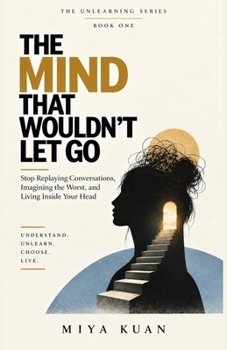
THE MIND THAT WOULDN’T LET GO: Stop Replaying Conversations, Imagining the Worst, and Living Inside Your Head (THE UNLEARNING SERIES)

Your mind isn't broken. It's trying too hard to protect you.
You replay the conversation long after it ended.
You reread the message, wondering what they really meant.
You imagine everything that could go wrong.
You make a decision-then reopen it because you still don't feel certain.
And even when you finally get reassurance, the relief never seems to last.
THE MIND THAT WOULDN'T LET GO is a practical guide for people who are exhausted from living inside their own thoughts.
Instead of telling you to "just stop overthinking" or think more positively, Miya Kuan helps you understand why your mind keeps returning to unanswered questions-and what to do when thinking stops being useful and becomes a loop.
Through relatable everyday situations and practical exercises, you'll learn how to:
Recognize the difference between reflection and ruminationSeparate facts from assumptions, predictions, and mind-readingStop replaying conversations that no longer need solvingReduce reassurance-seeking and compulsive checkingMake decisions without demanding 100% certaintyInterrupt an overthinking spiral before it consumes your dayBuild self-trust even when you might be wrongLeave some questions unanswered without feeling unsafeAt the heart of the book is The LET GO Method:
L - Locate the Loop
E - Extract the Facts
T - Trace the Fear
G - Give Up False Certainty
O - Own the Next Move
You'll also discover your dominant overthinking pattern, map your personal rumination loop, build your own Anti-Loop Plan, and use a 30-Day Letting Go Practice to turn insight into everyday change.
Because freedom doesn't require a perfectly quiet mind.
A thought returning does not mean it still needs an answer.
THE MIND THAT WOULDN'T LET GO is Book One of The Unlearning Series-books for understanding the patterns that keep you stuck, unlearning what no longer serves you, and choosing a freer way to live.
This description is much more signature-driven than a generic overthinking description because the LET GO Method + Unlearning Series + signature sentence become recognizable intellectual assets of the book.
Customer Reviews
ThriftBooks ® and the ThriftBooks ® logo are registered trademarks of Thrift Books Global, LLC
