


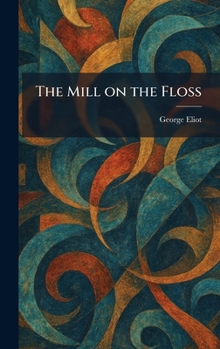
The Mill on the Floss


Select Format
Select Condition 
Book Overview
"The Mill on the Floss" is a profound masterpiece of Victorian literature that explores the emotional complexities of family, societal duty, and the struggle for personal fulfillment. Centered on the lives of Maggie Tulliver and her brother Tom, the narrative unfolds against the backdrop of the English countryside and the shifting fortunes of their family's mill on the River Floss. Maggie, a spirited and intelligent young woman, finds herself constantly at odds with the rigid expectations of her community and the uncompromising nature of her beloved brother.
As the Tulliver family faces financial ruin and social displacement, George Eliot masterfully weaves a tale of moral conflict and tragic choices. The novel delves deeply into the psychological development of its characters, contrasting Maggie's yearning for intellectual and emotional depth with the practical, often harsh, realities of provincial life. Rich in symbolism and atmospheric detail, "The Mill on the Floss" remains one of the most significant works of the 19th century, offering a timeless meditation on the bonds that tie us to our past and the forces that shape our destinies. It is a compelling exploration of human frailty and the enduring power of sibling love.
This work has been selected by scholars as being culturally important, and is part of the knowledge base of civilization as we know it. This work was reproduced from the original artifact, and remains as true to the original work as possible. Therefore, you may see the original copyright references, library stamps (as most of these works have been housed in our most important libraries around the world), and other notations in the work.
This work is in the public domain in the United States of America, and possibly other nations. Within the United States, you may freely copy and distribute this work, as no entity (individual or corporate) has a copyright on the body of the work.
As a reproduction of a historical artifact, this work may contain missing or blurred pages, poor pictures, errant marks, etc. Scholars believe, and we concur, that this work is important enough to be preserved, reproduced, and made generally available to the public. We appreciate your support of the preservation process, and thank you for being an important part of keeping this knowledge alive and relevant.
Customer Reviews
Mill on the Floss
A work of great beauty, depth & an outstanding literary classic!
The Promethean heroine
The divided self.
ThriftBooks® and the ThriftBooks® logo are registered trademarks of Thrift Books Global, LLC
