


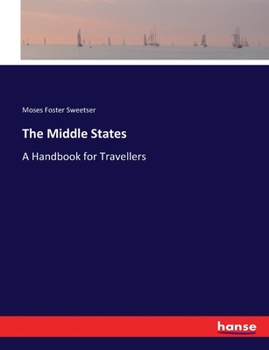
The Middle States: A Handbook for Travellers
No Customer Reviews

Select Format
Select Condition 
Book Overview
The Middle States - A Handbook for Travellers is an unchanged, high-quality reprint of the original edition of 1881. Hansebooks is editor of the literature on different topic areas such as research and science, travel and expeditions, cooking and nutrition, medicine, and other genres. As a publisher we focus on the preservation of historical literature. Many works of historical writers and scientists are available today as antiques only. Hansebooks newly publishes these books and contributes to the preservation of literature which has become rare and historical knowledge for the future.
Format:Paperback
Language:English
ISBN:3743444054
ISBN13:9783743444058
Release Date:November 2016
Publisher:Hansebooks
Length:616 Pages
Weight:2.39 lbs.
Dimensions:1.2" x 7.4" x 9.7"
Customer Reviews
0 rating
Copyright © 2026 Thriftbooks.com
Terms of Use | Privacy Policy | Do Not Sell/Share My Personal Information | Cookie Notice | Cookie Preferences | Accessibility Statement
ThriftBooks ® and the ThriftBooks ® logo are registered trademarks of Thrift Books Global, LLC
ThriftBooks ® and the ThriftBooks ® logo are registered trademarks of Thrift Books Global, LLC
