


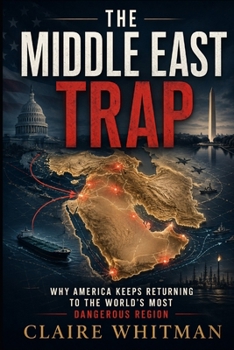
The Middle East Trap: Why America Keeps Returning to the World's Most Dangerous Region

Why does America keep returning to the Middle East, even after decades of war, fatigue, broken promises, and failed exits?
In The Middle East Trap, Claire Whitman delivers a sharp, balanced, and deeply readable analysis of one of the most persistent dilemmas in American foreign policy. From oil and shipping lanes to Israel, Iran, Saudi Arabia, Gaza, proxy warfare, terrorism, Russia, China, and the domestic politics of Washington, this book explains why the Middle East remains impossible for the United States to fully control-and impossible to fully abandon.
This is not a partisan defense of intervention, nor a simplistic call for withdrawal. It is a clear-eyed examination of the geography, alliances, rivalries, military infrastructure, moral contradictions, and political pressures that keep America tied to the world's most dangerous region.
Whitman argues that the trap was not built by America's enemies alone. It was built through accumulated choices: bases, arms sales, wars, sanctions, security guarantees, domestic lobbies, oil politics, and the belief that American power could manage contradictions indefinitely.
Written for readers who want serious insight without academic jargon, The Middle East Trap explores:
Why geography still matters in American strategyHow oil and gasoline prices shape U.S. politicsWhy Israel is both a strategic ally and a political burdenHow Iran uses proxies, missiles, and patience to raise America's costsWhy Gaza has become a test of American moral authorityHow Saudi Arabia exposes the price of stabilityWhy the wars in Iraq and Afghanistan still haunt WashingtonHow Russia and China exploit American fatigueWhy leaving the Middle East is far harder than promising to leave itAt once urgent and sober, The Middle East Trap is a powerful guide to understanding why every American president wants to escape the region-and why the region keeps pulling America back.Customer Reviews
ThriftBooks ® and the ThriftBooks ® logo are registered trademarks of Thrift Books Global, LLC
