


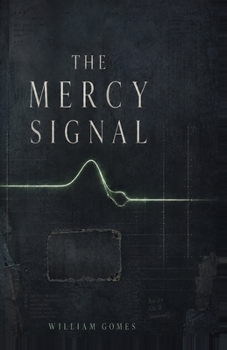
The Mercy Signal

A forgotten signal has survived every attempt to explain it. What it carries may be a warning. What it asks may be impossible.
Idris Bello arrives at the declining National Long Baseline Institute for what should be a routine two-week assignment: investigate an anomaly on a decommissioned deep-space line, identify the instrumental fault and write the finding that will close the file.
But the signal refuses every ordinary explanation.
Its interval does not vary. Structures hidden within it recur across records made years apart by equipment with no shared clock or components. Working alongside analyst Sana Yusuf, who had raised concerns long before his arrival, Idris follows the evidence from apparent malfunction to something far more consequential.
The transmission is structured. It is deliberate. It contains a description of a rise, a turn and a return that carries harm. Behind that warning lies an instruction addressed to a receiver capable of holding relationships that human instruments can only convert into measurements.
The institute cannot independently verify the discovery. Its people cannot perform the instruction. As the finding moves through registers, committees and systems of classification, careful procedure begins to contain what scientific method has revealed.
Idris must decide what responsibility requires when the evidence is compelling but incomplete, the consequences are unknowable, and no one within the institution has to choose suppression for the warning to disappear.
The Mercy Signal is a haunting work of literary speculative fiction about first contact, scientific uncertainty, institutional silence and the moral cost of preserving a message that may have arrived before humanity is capable of receiving it.
For readers drawn to intellectually ambitious science fiction, procedural suspense and morally complex novels about evidence, conscience and the danger of being believed too late.
Customer Reviews
ThriftBooks ® and the ThriftBooks ® logo are registered trademarks of Thrift Books Global, LLC
