


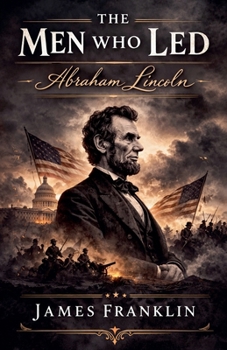
The Men Who Led: Abraham Lincoln

THE MEN WHO LED: ABRAHAM LINCOLN
He arrived in New Salem in the spring of 1831 on a flatboat, twenty-two years old, without money or connections or any established reputation. He had taught himself to read by firelight, memorized Shakespeare in a log cabin, and decided, with the specific determination of a person who has nothing and intends to have more, that the world was worth understanding seriously.
What he made of that determination is the subject of this book.
Abraham Lincoln is the complete biography of the most consequential American president, a life examined from the Kentucky cabin through the Illinois prairie, through the law offices and the state legislature and the failed Senate campaigns, through the debates with Douglas and the Cooper Union address and the nomination and the presidency and the war. It is the story of a man who held the right moral convictions when holding them was costly, who moved toward the right outcomes at the pace the political situation permitted rather than the pace that comfort demanded, and who paid, in the face visible in the photographs of 1865, everything that the republic asked of him.
This biography does not offer the marble saint of the mythology. It offers something harder and more useful: the actual person, funny, melancholic, brilliant, sometimes wrong, always working, whose preparation across fifty-six years produced, at the exact moment the republic needed it most, the leadership that saved the Union, abolished slavery, and articulated the purpose of democratic self-governance with a precision and an honesty that the republic has been trying to live up to ever since.
It examines the Emancipation Proclamation not as a single act of moral courage but as the culmination of a twenty-eight-year legal and political project. It examines the Gettysburg Address and the Second Inaugural as the products of a literary intelligence that had been developing since the New Salem debating society. It examines the military leadership, the cabinet management, the political coalition-building, the personal grief of Willie's death and the accumulated cost of four years of war. And it examines, with the honesty the record requires, both the genuine greatness of what Lincoln accomplished and the genuine limitations of a man who was formed by his time and who moved beyond it further than anyone could reasonably have expected.
Why does Lincoln still matter? Not because his specific decisions are templates for ours. Because his life is the most complete demonstration in American political history of what serious democratic leadership looks like, what it requires, what it costs, and what it can accomplish when the preparation is adequate and the person is willing to pay what the moment costs.
The work he began is not finished. The articulation he left us, in the documents, available to every generation willing to read them with the seriousness they require, is the most honest account of what the republic is supposed to be doing and why it matters.
He kept working until he could not work anymore. The least we can do is read him carefully.
Customer Reviews
ThriftBooks® and the ThriftBooks® logo are registered trademarks of Thrift Books Global, LLC
