


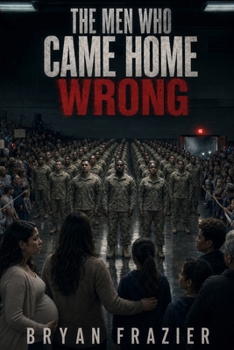
The Men Who Came Home Wrong

The deployment returned their Soldiers. Something else came home inside the memories.
When a company-sized formation returns from an isolated deployment, the crowded homecoming is filled with flags, children, relieved spouses, and familiar faces. Among the returning troops are three Soldiers whose families have spent months imagining this reunion: SSG Isaiah Cole, infantry squad leader and devoted father; SGT Luis Alvarez, a combat medic coming home to his pregnant wife; and CPT Simone Ward, an intelligence officer who has already lost too much. All three know their homes, their histories, and the people waiting for them. At first, they seem not damaged by the deployment but improved by it.
Isaiah remembers every small request his wife, Maya, ever made-even the ones he ignored before leaving. Luis has lost his fear of blood and can sense illness before symptoms appear. Simone alone insists that something followed the unit out of an abandoned monitoring station. The changes are subtle enough to resemble healing, but the families begin to notice emotional mistakes beneath the perfect recall: a hug held for a rehearsed number of seconds, grief described without being felt, affection delivered with the precision of an answer learned for a test.
As military clinicians search for trauma and the chain of command struggles to contain a problem it cannot name, photographs reveal impossible delays and loved ones are pressured to accept reassuring explanations. Maya, Elena, and Simone realize that recognition itself may be dangerous. Whatever returned can reproduce scars, biology, habits, and intimate memories. What it cannot easily imitate is contradiction-the shame people avoid, the truths they refuse to remember, and the moral choices that cannot be predicted from a life already lived.
The Men Who Came Home Wrong combines emotionally grounded military-family drama with psychological horror, supernatural mystery, moral injury, and controlled body horror. It asks whether memory is enough to make someone human, how war changes the distance between service members and the people who love them, and what a family owes a familiar face when the person behind it may be gone. Written for readers who enjoy slow-building dread, identity horror, unsettling homecomings, grief-centered suspense, military settings, and monsters that exploit love rather than darkness, this novel delivers an intimate and terrifying story about the cost of welcoming someone home.
Enter a military homecoming where recognition may be the most dangerous act of love.
Customer Reviews
ThriftBooks ® and the ThriftBooks ® logo are registered trademarks of Thrift Books Global, LLC
