


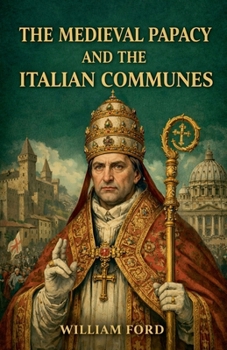
The Medieval Papacy and the Italian Communes

The Medieval Papacy and the Italian Communes by William Ford is a sweeping and intellectually gripping exploration of one of the most dynamic political struggles in Western history: the clash-and collaboration-between the popes of Rome and the fiercely independent city-states of medieval Italy.
From the reforms of Pope Gregory VII to the commanding authority of Pope Innocent III, from the revolutionary fervor of Cola di Rienzo to the humanist republicanism of Leonardo Bruni, this book uncovers how sacred monarchy and civic liberty shaped one another across three transformative centuries. Far from a simple story of domination or rebellion, it reveals a complex relationship of rivalry, negotiation, legal innovation, financial interdependence, and political imagination.
Rich in primary sources, vivid personalities, and institutional analysis, the book demonstrates how canon law courts, communal statutes, papal taxation, banking networks, and public ritual created a uniquely Italian laboratory of political modernity. The tensions between universal spiritual authority and local civic sovereignty laid the groundwork for Renaissance statecraft and influenced the very language of sovereignty that would define early modern Europe.
Scholarly yet accessible, ambitious yet grounded in archival research, The Medieval Papacy and the Italian Communes offers readers a dramatic portrait of a fragmented Italy where popes were princes, cities were republics, and the foundations of Western political thought were forged in conflict and compromise.
A must-read for students of medieval history, political theory, Church history, and the origins of the modern state.
Customer Reviews
ThriftBooks® and the ThriftBooks® logo are registered trademarks of Thrift Books Global, LLC
