


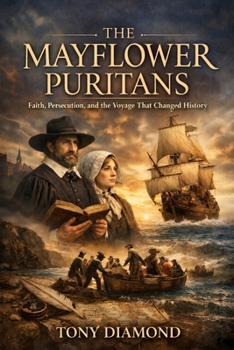
The Mayflower Puritans

The Mayflower Puritans
Tony Diamond
What truly drove the passengers of the Mayflower to leave England in 1620?
In The Mayflower Puritans, Tony Diamond offers a rigorous and thought-provoking examination of the religious upheaval that led a small community of English dissenters to risk everything for freedom of worship. Moving beyond familiar Thanksgiving narratives, this book situates the Mayflower voyage within two centuries of theological conflict, political struggle, and fierce debate over the authority of Scripture.
Beginning with the reforming voices of John Wycliffe and William Tyndale, Diamond traces the turbulent course of the English Reformation through the reigns of Henry VIII, Mary Tudor, Elizabeth I, and James I. At the heart of the story is a defining conviction: that the Bible should be available to ordinary people in their own language, and that conscience could not be governed by crown or clergy.
The book explores:
The fight to translate and distribute the Bible in English
The Marian persecutions and the exile communities in Europe
The rise of the Geneva Bible and its shaping influence on Puritan belief
The Hampton Court Conference and the creation of the King James Bible
The growing legal, social, and economic pressures placed on dissenters
The circumstances that made emigration to the New World a final and necessary step
Diamond argues that the Mayflower voyage was not a spontaneous act of colonial ambition but the culmination of sustained religious tension. For the men and women aboard, departure was an act of conviction rooted in Scripture and conscience.
Written for readers with a serious interest in both American origins and Protestant history, The Mayflower Puritans offers a clear and structured account of how contested interpretations of the Bible reshaped nations. It presents the Pilgrims not as mythic founders, but as participants in a larger struggle over authority, faith, and governance - one whose legacy would profoundly influence the emerging United States.
This is a concise and carefully researched study of belief under pressure, and of how religious conviction helped lay foundations that still shape American life today.
Customer Reviews
ThriftBooks® and the ThriftBooks® logo are registered trademarks of Thrift Books Global, LLC
