


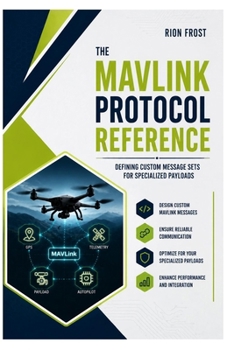
The MAVLink Protocol Reference: Defining Custom Message Sets for Specialized Payloads

A small change in your aircraft's communication layer can unlock an entirely new capability-or create hours of confusing errors. The difference often comes down to how well you understand the data moving between the flight controller, ground station, onboard computer, and connected equipment.
The MAVLink Protocol Reference gives you a practical path through that complexity.
Rather than treating vehicle communication like a mysterious stream of numbers, this guide shows you how information is structured, transmitted, received, checked, and used across an unmanned aircraft system. You'll see how the pieces fit together and how to extend an existing communication framework without damaging compatibility or reliability.
Inside, you'll learn how to:
- Understand packet structure, identifiers, fields, commands, and acknowledgements
- Follow the flow of telemetry between connected components
- Create new data definitions for unique sensors and onboard equipment
- Choose suitable field types, units, names, and update rates
- Generate usable code from XML definitions
- Connect flight controllers, onboard processors, and ground stations
- Handle heartbeat signals, timeouts, missing packets, and communication failures
- Test new definitions before introducing them into real flight operations
- Maintain compatibility as software, firmware, and hardware evolve
- Document additions so other developers can understand and support them
The explanations are practical and conversational, making the subject easier to follow without removing the technical detail developers need. You won't simply copy an example and hope it works. You'll understand why each decision matters, what can go wrong, and how to diagnose problems when different components refuse to communicate correctly.
Whether you're developing an unusual sensor, integrating scientific equipment, building an onboard service, or expanding an unmanned aircraft platform, this book will help you create cleaner and more dependable communication workflows.
Stop treating aircraft data exchange as a black box. Learn how it works, extend it carefully, and create additions that remain understandable long after the first successful test.
Customer Reviews
ThriftBooks ® and the ThriftBooks ® logo are registered trademarks of Thrift Books Global, LLC
