


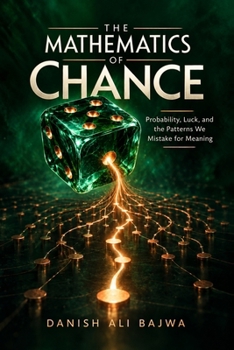
The Mathematics of Chance: Probability, Luck, and the Patterns We Mistake for Meaning

A coincidence can feel like a message. A winning streak can look like talent. A precise number can sound like certainty.
But what do the odds actually tell us?
In The Mathematics of Chance, Danish Ali Bajwa explores probability as a practical way to understand uncertainty, evaluate evidence, and make decisions before the outcome is known. Written for curious general readers, the book builds its ideas through clear arithmetic and carefully labeled examples, without requiring calculus.
Discover why shared birthdays are less surprising than they seem, why a reliable detector can produce mostly false alarms, and why the same average can conceal very different experiences. Learn how independent events differ from connected risks, how new evidence should change a belief, and why a good decision can still end badly.
The book also examines the people missing from success stories, the difference between statistical significance and practical importance, the design of fair experiments, and the methods that make probability forecasts accountable. Its final chapters consider luck, opportunity, responsibility, and the limits of turning human lives into numbers.
Across twelve chapters, worked examples and selected source notes connect mathematical ideas to everyday judgment. The aim is not to predict everything. It is to recognize what a claim establishes, which assumptions hold it up, and what information would make you think again.
For readers interested in popular mathematics, statistical reasoning, and clearer decisions, this is an invitation to live with uncertainty without surrendering to it.
Customer Reviews
ThriftBooks ® and the ThriftBooks ® logo are registered trademarks of Thrift Books Global, LLC
