


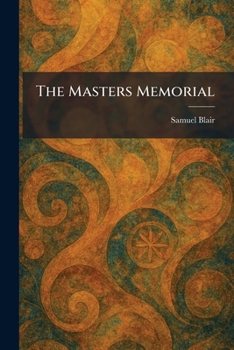
The Masters Memorial

Select Format
Select Condition 
Book Overview
"The Masters Memorial" is a profound collection of devotional meditations and communion addresses compiled by Reverend Samuel Blair. Designed to guide both clergy and laity through the sacred observance of the Lord's Supper, this work offers a rich tapestry of spiritual reflections that emphasize the solemnity and grace of the sacrament. Each selection is crafted to deepen the participant's understanding of the rite, providing a bridge between theological doctrine and the lived experience of faith.
The volume serves as a comprehensive manual for worship, featuring contributions from various respected voices in the ministry. These discourses explore themes of sacrifice, remembrance, and communal fellowship, making "The Masters Memorial" an invaluable resource for those seeking to enrich their liturgical practice or personal devotion. Blair's curation ensures a focus on the spiritual nourishment found within the memorial of Christ, presenting the material with a dignity and reverence befitting its subject matter. Whether used for sermon preparation or private study, the book remains a significant historical testament to early 20th-century Protestant sacramental thought and pastoral care.
This work has been selected by scholars as being culturally important, and is part of the knowledge base of civilization as we know it. This work was reproduced from the original artifact, and remains as true to the original work as possible. Therefore, you may see the original copyright references, library stamps (as most of these works have been housed in our most important libraries around the world), and other notations in the work.
This work is in the public domain in the United States of America, and possibly other nations. Within the United States, you may freely copy and distribute this work, as no entity (individual or corporate) has a copyright on the body of the work.
As a reproduction of a historical artifact, this work may contain missing or blurred pages, poor pictures, errant marks, etc. Scholars believe, and we concur, that this work is important enough to be preserved, reproduced, and made generally available to the public. We appreciate your support of the preservation process, and thank you for being an important part of keeping this knowledge alive and relevant.
Customer Reviews
ThriftBooks ® and the ThriftBooks ® logo are registered trademarks of Thrift Books Global, LLC
