


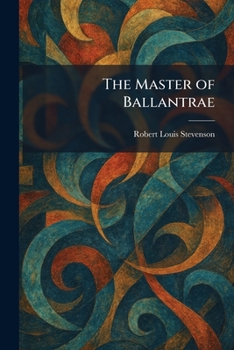
The Master of Ballantrae

"The Master of Ballantrae" is a dark and complex tale of sibling rivalry, honor, and psychological obsession. Set primarily in Scotland during the Jacobite Rising of 1745, the story focuses on the ancestral house of Durrisdeer and the two brothers who reside there: James Durie, the dashing but unscrupulous Master of Ballantrae, and Henry Durie, his dutiful younger brother. When the brothers are forced to take opposing sides in the conflict to preserve the family estate, James's supposed death leads to a series of tragic events that haunt the family for generations.
As James repeatedly returns to claim what he believes is his, a harrowing battle of wills ensues, taking the characters from the Scottish Highlands to the dangerous wilderness of colonial North America. Robert Louis Stevenson moves away from traditional adventure to explore the nuances of morality, the corrosive power of envy, and the duality of the human spirit. "The Master of Ballantrae" is a masterful combination of historical fiction and the Gothic tradition, offering readers a somber and atmospheric exploration of the ties that bind and eventually destroy a family. It stands as one of the most compelling character studies in 19th-century literature.
This work has been selected by scholars as being culturally important, and is part of the knowledge base of civilization as we know it. This work was reproduced from the original artifact, and remains as true to the original work as possible. Therefore, you may see the original copyright references, library stamps (as most of these works have been housed in our most important libraries around the world), and other notations in the work.
This work is in the public domain in the United States of America, and possibly other nations. Within the United States, you may freely copy and distribute this work, as no entity (individual or corporate) has a copyright on the body of the work.
As a reproduction of a historical artifact, this work may contain missing or blurred pages, poor pictures, errant marks, etc. Scholars believe, and we concur, that this work is important enough to be preserved, reproduced, and made generally available to the public. We appreciate your support of the preservation process, and thank you for being an important part of keeping this knowledge alive and relevant.
Customer Reviews
ThriftBooks ® and the ThriftBooks ® logo are registered trademarks of Thrift Books Global, LLC
