


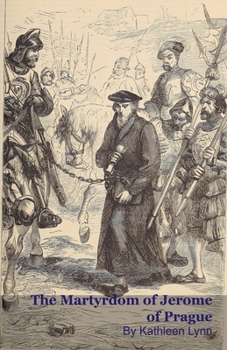
The Martyrdom of Jerome of Prague

The Martyrdom of Jerome of Prague
The execution of Jerome of Prague on May 30, 1416, stands as one of the most significant intellectual and religious markers of the late medieval period, signaling a profound shift in the relationship between individual conscience and institutional authority. Jerome was a figure of exceptional academic pedigree and restless energy, whose life served as a bridge between the radical English reformism of John Wycliffe and the nascent Bohemian national movement spearheaded by Jan Hus. Unlike Hus, who was primarily a priest and a preacher, Jerome was a peripatetic scholar, a Master of Arts from four of Europe's most prestigious universities, and a philosopher whose adherence to Realism provided the metaphysical foundation for the Bohemian Reformation. His journey to the stake at the Council of Constance was not merely the result of a theological dispute but the culmination of a decade-long conflict involving the Great Western Schism, the rivalry between Realism and Nominalism in the universities, and the emerging demands for vernacular liturgy and clerical poverty.
Related Subjects
HistoryCustomer Reviews
ThriftBooks® and the ThriftBooks® logo are registered trademarks of Thrift Books Global, LLC
