


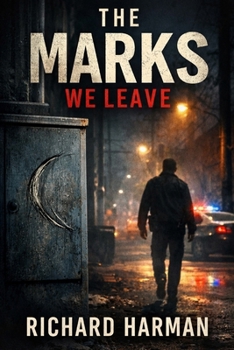
The Marks We Leave

The Marks We Leave is a psychological horror and suspense novel told entirely from the perspective of a veteran police officer who understands the justice system too well to believe in its myths.
At first, his life is routine. Patrols, domestic calls, reports written in neutral language that quietly forgive repeated harm. Over time, he begins to recognize patterns the system is designed to forget. Certain homes. Certain men. Certain silences that return again and again because no line has technically been crossed. He realizes the law doesn't stop violence. It manages when violence becomes visible.
He starts making small, defensible adjustments. A sentence added to a report. Context preserved instead of erased. Memory introduced where the system prefers amnesia. These changes don't look like corruption. They look like competence. And they work. Backup arrives sooner. Escalation happens earlier. Some harm is interrupted before it can finish unfolding.
But pressure always has consequences.
As his influence grows, another officer begins to notice the same fault lines. Then another. Marks begin appearing across the city, subtle symbols left near places where the system failed or intervened too late. Someone else is mapping outcomes, but without the same restraint. What began as quiet manipulation becomes contested territory.
The narrator mentors, then is replaced by, a younger officer who refines the method, applying pressure more cleanly and more effectively. The system rewards him at first, then tests him, then dilutes him when his influence becomes too visible. In the end, he is removed not for wrongdoing, but for reminding the system that force still exists beneath its carefully managed language.
The narrator is reassigned, then phased out entirely, watching from a distance as the system absorbs what worked, erases what it can't tolerate, and reproduces the method without the judgment that once kept it controlled. Violence doesn't stop. It migrates. Influence doesn't disappear. It spreads.
By the end, no one is punished. No villain is unmasked. The city continues breathing, quieter in some places, louder in others. The marks remain, passed down as half-understood symbols and techniques stripped of context. The book closes on a chilling truth: systems don't need monsters to do harm. They need competent people who believe they're improving things.
The Marks We Leave is not a story about justice or redemption.
It's about memory, pressure, and the invisible choices that shape outcomes long after the people who made them are gone.
Customer Reviews
ThriftBooks® and the ThriftBooks® logo are registered trademarks of Thrift Books Global, LLC
