


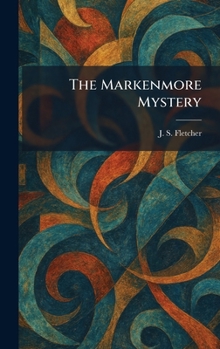
The Markenmore Mystery

"The Markenmore Mystery" is a compelling example of classic British detective fiction from the Golden Age of crime writing. When Guy Markenmore returns to his ancestral home, Markenmore Court, after a seven-year absence, his arrival is met with tension and unresolved family conflict. However, the reunion is cut short when Guy is discovered dead on the nearby downs, the victim of a calculated murder. As the investigation unfolds, a complex web of motives emerges, involving hidden inheritances, local rivalries, and long-buried secrets within the Markenmore family.
Authored by J. S. Fletcher, a prolific master of the genre, this novel follows the meticulous efforts of investigators to unravel a puzzle where every resident of the village seems to have something to hide. With its atmospheric setting in the English countryside and its focus on deductive reasoning, "The Markenmore Mystery" remains a quintessential mystery that challenges readers to identify the culprit before the final reveal. The work is celebrated for its intricate plotting and its vivid depiction of the social dynamics of the early 20th century, making it a essential read for fans of traditional whodunits and historical crime fiction.
This work has been selected by scholars as being culturally important, and is part of the knowledge base of civilization as we know it. This work was reproduced from the original artifact, and remains as true to the original work as possible. Therefore, you may see the original copyright references, library stamps (as most of these works have been housed in our most important libraries around the world), and other notations in the work.
This work is in the public domain in the United States of America, and possibly other nations. Within the United States, you may freely copy and distribute this work, as no entity (individual or corporate) has a copyright on the body of the work.
As a reproduction of a historical artifact, this work may contain missing or blurred pages, poor pictures, errant marks, etc. Scholars believe, and we concur, that this work is important enough to be preserved, reproduced, and made generally available to the public. We appreciate your support of the preservation process, and thank you for being an important part of keeping this knowledge alive and relevant.
Customer Reviews
ThriftBooks ® and the ThriftBooks ® logo are registered trademarks of Thrift Books Global, LLC
