


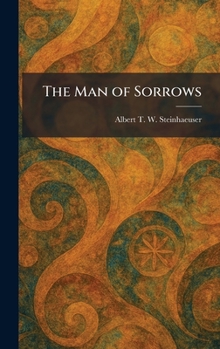
The Man of Sorrows

"The Man of Sorrows" is a profound and meditative devotional work centered on the Passion of Jesus Christ. Written by the respected theologian Albert T. W. Steinhaeuser, this book serves as a spiritual companion, particularly during the season of Lent, guiding readers through the final days and suffering of Christ with deep theological insight and prayerful reflection. Each section combines scriptural passages with thoughtful commentary, classic hymns, and litanies, creating a rich liturgical experience for the individual or for communal worship.
Steinhaeuser's approach is both scholarly and deeply personal, aiming to bring the reader into a closer contemplation of the central mystery of the Christian faith. The work is structured to foster a daily practice of devotion, providing a structured path for considering the sacrifice and love demonstrated in the Crucifixion. Valued for its literary beauty and spiritual depth, "The Man of Sorrows" remains an essential resource for those seeking to deepen their understanding of the Gospel narrative and the transformative power of the Passion. Its timeless themes of redemption, sorrow, and ultimate hope continue to resonate with readers seeking spiritual growth and a more profound connection to the life of Christ.
This work has been selected by scholars as being culturally important, and is part of the knowledge base of civilization as we know it. This work was reproduced from the original artifact, and remains as true to the original work as possible. Therefore, you may see the original copyright references, library stamps (as most of these works have been housed in our most important libraries around the world), and other notations in the work.
This work is in the public domain in the United States of America, and possibly other nations. Within the United States, you may freely copy and distribute this work, as no entity (individual or corporate) has a copyright on the body of the work.
As a reproduction of a historical artifact, this work may contain missing or blurred pages, poor pictures, errant marks, etc. Scholars believe, and we concur, that this work is important enough to be preserved, reproduced, and made generally available to the public. We appreciate your support of the preservation process, and thank you for being an important part of keeping this knowledge alive and relevant.
Customer Reviews
ThriftBooks ® and the ThriftBooks ® logo are registered trademarks of Thrift Books Global, LLC
