


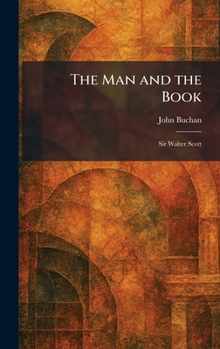
The Man and the Book: Sir Walter Scott

"The Man and the Book: Sir Walter Scott" is a profound exploration of one of Scotland's most legendary literary figures, authored by the celebrated writer and statesman John Buchan. This work provides an insightful analysis of Sir Walter Scott's life and his monumental contribution to the world of letters. Buchan, a fellow Scotsman and master storyteller himself, brings a unique perspective to Scott's creative process, examining the intersection of his personal experiences and his enduring literary output.
The narrative delves into the themes of Scott's influential works, highlighting how his deep connection to the Scottish borders and national history helped define the Romantic movement. Buchan explores Scott's character-his resilience in the face of adversity and his unwavering commitment to his craft-presenting him not just as a writer, but as a central cultural icon of his era. This study remains an essential read for those interested in the history of the novel, the evolution of historical fiction, and the rich literary heritage of Scotland. Through Buchan's eloquent prose, readers gain a deeper appreciation for the genius behind "Ivanhoe" and "Rob Roy," and the lasting impact Sir Walter Scott continues to have on global literature.
This work has been selected by scholars as being culturally important, and is part of the knowledge base of civilization as we know it. This work was reproduced from the original artifact, and remains as true to the original work as possible. Therefore, you may see the original copyright references, library stamps (as most of these works have been housed in our most important libraries around the world), and other notations in the work.
This work is in the public domain in the United States of America, and possibly other nations. Within the United States, you may freely copy and distribute this work, as no entity (individual or corporate) has a copyright on the body of the work.
As a reproduction of a historical artifact, this work may contain missing or blurred pages, poor pictures, errant marks, etc. Scholars believe, and we concur, that this work is important enough to be preserved, reproduced, and made generally available to the public. We appreciate your support of the preservation process, and thank you for being an important part of keeping this knowledge alive and relevant.
Customer Reviews
ThriftBooks ® and the ThriftBooks ® logo are registered trademarks of Thrift Books Global, LLC
