


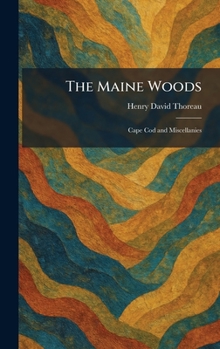
The Maine Woods: Cape Cod and Miscellanies

"The Maine Woods; Cape Cod and Miscellanies" is a profound exploration of the rugged New England landscape and the intricate relationship between humanity and the natural world. This collection brings together some of Henry David Thoreau's most evocative travel writing, documenting his excursions through the dense forests of Maine and along the shifting sands of Cape Cod. With the keen eye of a naturalist and the soul of a philosopher, Thoreau captures the raw beauty and spiritual depth of the wilderness.
In "The Maine Woods", readers follow Thoreau as he navigates the untamed backcountry, reflecting on the primal power of the forest and the wisdom of his indigenous guides. "Cape Cod" presents a different but equally compelling environment, where the author meditates on the sea's relentless force and the fragile resilience of life on the shore. The included "Miscellanies" further expand the scope of the volume, featuring essays that showcase Thoreau's sharp intellect and his commitment to transcendentalist ideals.
As a cornerstone of American nature writing, this work remains essential for those interested in environmental philosophy and literary history. Thoreau's observations on conservation, solitude, and the intrinsic value of the wild continue to resonate, offering timeless insights into the preservation of our natural heritage.
This work has been selected by scholars as being culturally important, and is part of the knowledge base of civilization as we know it. This work was reproduced from the original artifact, and remains as true to the original work as possible. Therefore, you may see the original copyright references, library stamps (as most of these works have been housed in our most important libraries around the world), and other notations in the work.
This work is in the public domain in the United States of America, and possibly other nations. Within the United States, you may freely copy and distribute this work, as no entity (individual or corporate) has a copyright on the body of the work.
As a reproduction of a historical artifact, this work may contain missing or blurred pages, poor pictures, errant marks, etc. Scholars believe, and we concur, that this work is important enough to be preserved, reproduced, and made generally available to the public. We appreciate your support of the preservation process, and thank you for being an important part of keeping this knowledge alive and relevant.
Customer Reviews
ThriftBooks ® and the ThriftBooks ® logo are registered trademarks of Thrift Books Global, LLC
