


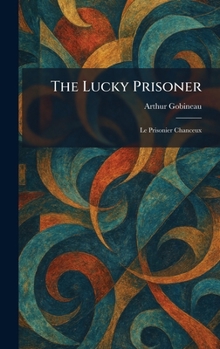
The Lucky Prisoner: Le Prisonier Chanceux

"The Lucky Prisoner" is a sweeping historical adventure set against the turbulent backdrop of 16th-century France during the brutal Wars of Religion. Written by the versatile Arthur Gobineau, this novel follows the perilous journeys and romantic escapades of Jean de la Tour-Miracle, a young nobleman whose charm and wit are frequently put to the test. As Jean navigates a landscape fractured by religious zealotry and political treachery, he finds himself moving between the camps of the Huguenots and the Catholics, often escaping certain death through sheer luck or clever stratagem.
Combining elements of the swashbuckling epic with a deep appreciation for historical detail, Gobineau paints a vivid portrait of a nation in conflict. The narrative is rich with intrigue, featuring encounters with historical figures and capturing the spirit of the Renaissance era. Beyond the action, the work explores themes of identity, loyalty, and the human capacity for survival in an age of intolerance. "The Lucky Prisoner" stands as a significant work of literature that offers both an exciting narrative and a nuanced look at a pivotal moment in European history.
This work has been selected by scholars as being culturally important, and is part of the knowledge base of civilization as we know it. This work was reproduced from the original artifact, and remains as true to the original work as possible. Therefore, you may see the original copyright references, library stamps (as most of these works have been housed in our most important libraries around the world), and other notations in the work.
This work is in the public domain in the United States of America, and possibly other nations. Within the United States, you may freely copy and distribute this work, as no entity (individual or corporate) has a copyright on the body of the work.
As a reproduction of a historical artifact, this work may contain missing or blurred pages, poor pictures, errant marks, etc. Scholars believe, and we concur, that this work is important enough to be preserved, reproduced, and made generally available to the public. We appreciate your support of the preservation process, and thank you for being an important part of keeping this knowledge alive and relevant.
Customer Reviews
ThriftBooks ® and the ThriftBooks ® logo are registered trademarks of Thrift Books Global, LLC
